


On Regret, Repentance, and the Possibility of Repairing What Has Already Been Done
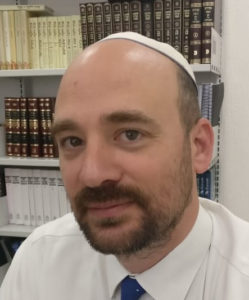
Rabbi Guy Tal
by Rabbi Guy Tal
“Experience Too Late”
Letitia Elizabeth Landon (L. E. L.), 1838
It is the past that maketh my despair;
The dark, the sad, the irrevocable past.
Alas! why should our lot in life be made,
Before we know that life? Experience comes,
But comes too late. If I could now recall
All that I now regret, how different
Would be my choice! at best a choice of ill;
But better than my miserable past.
Loathed, yet despised, why must I think of it?
Sorrow and regret are often our companions as we wander back through the errors of our past, revisiting those fateful moments that can never be undone. How different our lives might be if only we could summon a time machine and return to those critical junctures at which a single choice set our lives upon an unwanted course. A turn taken in the wrong direction, an act that should never have been committed, or a moment of carelessness whose price proved almost unbearable.
This is especially true of moral failings, or what we commonly call sins. Whether the transgression is against religious belief or against the ethical principles that shape our understanding of the world; whether a change in our convictions casts the decisions of our former selves in an entirely different light; or whether we commit an obvious wrong in a moment of weakness or error, the return to those moments, coupled with the knowledge that we can neither intervene nor make amends, can torment the soul with remorse and despair. In its darkest forms, such remorse may even give rise to self-loathing and an inner fracture, as a person comes to recognize within himself the depths to which he is capable of falling. He discovers that, under the right circumstances, there may be no barrier within him strong enough to halt his descent toward the fulfillment of his darkest impulses and desires, and toward acts so grave that they awaken nothing but revulsion and disgust.
The impossibility of changing the past is a real barrier between humanity and happiness, between the wounded human heart and the peace it so desperately seeks.
“For indeed, how can a person repair what he has distorted, when the sin has already been committed? Suppose a person has murdered his fellow; suppose he has committed adultery—how can he repair such a thing? Can he remove the deed that has already been done from existence?”
(Rabbi Moshe Chaim Luzzatto, The Path of the Just, Chapter 4).
And yet, against this seemingly impenetrable barrier, the great sun of teshuvah — repentance, return — rises before us. Teshuvah is the great hope and aspiration of human life. It is a vast and far-reaching idea, concerned not merely with repairing our sins and mistakes, but with guiding the world itself toward its ultimate restoration in the fullness of time.
“Universal teshuvah, which is the elevation and restoration of the world, and individual teshuvah, which concerns the particular personality of each and every person, down to the finest details of the specific rectifications of teshuvah, which the Holy Spirit knows how to delineate to their most minute particulars—all of these together constitute a single substance. Likewise, all those processes of cultural development through which the world emerges from its destruction—the structures of social and economic life, which continually become more refined alongside the rectification of every sin and transgression, from the gravest of offenses to the minutest enactments of the sages and the most exalted measures of piety—all form a single whole and are not severed from one another, ‘and all of them ascend to one place.’”
(Rabbi Abraham Isaac Kook, Orot HaTeshuvah, 4:3).
 The very meaning of the word teshuvah is to return — to return to what once was. But return to where? To our essential selves, to the innermost truth of our souls. This is true of the individual, who is good at his very essence, as Scripture declares: “G-d made man upright.” And it is true of creation as a whole: “And G-d saw everything that He had made, and behold, it was very good.” At its source, within the divine thought that preceded the unfolding of creation, everything is pure, unblemished, refined, and good. Yet along the long passage from the primordial ideal to the tangible reality of this world, the vessels were shattered, creation fell into disorder, and our deeds were tainted with it. Teshuvah is the journey back to that original purity, to the primal wholeness embedded within the very thought of creation.
Yet here we encounter, with renewed force, the very question with which we began. The aspiration is beautiful, but is it truly possible? We cannot undo the past. Our gravest mistakes remain standing before us, seemingly forever, barring our path back to that pure and wondrous ideal. How, then, can the past truly be changed? “The person has murdered; the person has committed adultery—can he remove the deed that has already been done from existence?”
The Ramchal’s answer to this question is both profound and astonishing. He locates the possibility of teshuvah in the boundless grace of G-d, in the attribute of divine mercy, and proposes a kind of spiritual paradox that at first seems almost impossible to grasp:
“Yet it is the attribute of mercy that provides the answer… that repentance should be granted to sinners through complete grace, so that the uprooting of the will should be regarded as the uprooting of the deed.”
At the root of every action lies the will. An act devoid of intention cannot truly be attributed to a human being created in the image of G-d. In the language of the Sages, it is merely “the act of a monkey.” Just as a monkey bears no moral responsibility for what it does, so an act performed without human intention has no true connection to the human and divine dimension of the soul, and is therefore devoid of its deepest significance. It follows that when an action is rooted in conscious will, its essential character lies not merely in the physical deed, but in the will that gave rise to it.
What, then, does it mean to say that the uprooting of the will is regarded as the uprooting of the deed?
Teshuvah shifts our gaze away from the deed itself — a finite act, confined to a particular moment, place, and material reality — and toward the more elusive realm of the will. The will is alive, dynamic, and capable of transformation. And precisely because it belongs to the spiritual realm, it is not imprisoned within the linear boundaries of time. It can therefore be transformed even retrospectively.
The will is not a “deed already done,” frozen forever within the lifeless matter of the past. It occupies an intermediate realm between the world of matter and the world of eternity. And because it belongs, at least in part, to that higher realm, it remains capable of transformation even after the deed itself has passed irretrievably into history.
Amoretti LXII
Edmund Spenser, 1595
The weary yeare his race now having run,
The new begins his compast course anew:
With shew of morning mylde he hath begun,
Betokening peace and plenty to ensew.
So let us, which this chaunge of weather vew,
Chaunge eeke our mynds and former lives amend,
The old yeares sinnes forepast let us eschew,
And fly the faults with which we did offend.
Then shall the new yeares joy forth freshly send,
Into the glooming world his gladsome ray:
And all these stormes which now his beauty blend,
Shall turne to caulmes and tymely cleare away.
So likewise love cheare you your heavy spright,
And chaunge old yeares annoy to new delight.
We return, then, to the question that opened this reflection: can the deed already done be unmade? The past does not yield — but the will that gave it birth is not bound by the same law. It remains alive, reachable by a grace that moves backward as freely as forward. This is teshuvah’s quiet work: not rewriting the past, but redeeming the hand that wrote it. It is this same turning that Spenser hears in the changing year — an invitation to let old sins perish with the old year, and begin again, mylde and unburdened. Landon could not see past her despair to such a dawn; her past came “too late,” and stayed. But the sonnet that follows answers her, insisting that no winter is final, and that the will to change is itself already a kind of arrival.
Rabbi Guy Tal is Rabbi at Beth Israel Congregation is Edmonton.

Be the first to comment on "Rabbi Guy Tal: Healing a broken soul"