


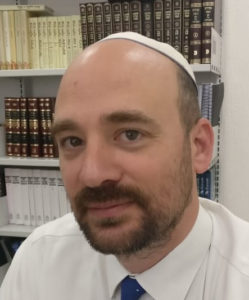
Rabbi Guy Tal
By Rabbi Guy Tal
(AJNews) – In his novel A Guest for the Night (Oreach Nata Lalun), Nobel laureate S.Y. Agnon describes the narrator’s return to his hometown of Szibucz after the First World War. There, he finds the old study hall – once brimming with life – desolate and struggling to gather a minyan:
“Our old study hall was empty of people… Of those who once filled the study hall with Torah and mitzvot, some had died and some had gone into exile… We stood, a tiny handful, waiting for a tenth man to arrive and complete our quorum, so that our prayer would not remain the prayer of an individual.”
When Agnon, the towering figure of 20th-century Hebrew literature, wishes to capture a community’s decline, he focuses on its beating heart: the daily minyan. Conversely, when portraying the strength of Jewish communal life, he returns to this same ancient institution. In his story The Good Years (HaShanim HaTovot), Agnon describes how praying with a minyan prolongs the lives of the family in the tale, infusing their old age with vitality, vigor, and existential purpose:
“These elders, who in all their days never missed communal prayer, would rise early for the synagogue, before the break of dawn, dragging their feet through the snow and bitter cold to complete a minyan – as though the entire world stood waiting for their Kaddish.”
Agnon further illustrates how the minyan fosters solidarity and mutual responsibility:
“When Israel gathers in synagogues and study halls to pray as a congregation, the Holy One, blessed be He, weaves their prayers together and fashions them into a crown for His head. For the prayer of an individual cannot compare to communal prayer: the individual stands and pleads for himself, whereas the congregation stands and pleads for one another, until they are bound together as one.” (Days of Awe / Yamim Noraim)
And he shows how this shared space creates an immediate sense of belonging and family:
“Yitzhak entered the synagogue and sat near the door. Ten Jews arrived and began to pray. His voice joined theirs, and his spirit found rest. He forgot that he was a stranger and a sojourner in the land, and he felt as though he were sitting in his father’s house, among his brothers and townsfolk.” (Only Yesterday / Temol Shilshom)
Our Sages speak at length about the power of communal prayer and the assurance that it is always heard: “Rabbi Yochanan said: From where do we know that the Holy One, blessed be He, never spurns the prayer of the many? As it is said: ‘Behold, God is mighty, and does not despise'” (Berakhot 8a). “Rabbi Yitzhak said… and from where do we know that when ten pray together the Divine Presence rests among them? As it is said: ‘G-d stands in the congregation of G-d'” (Berakhot 6a).
The Zohar explains the merit of praying with a minyan: “When an individual prays alone, the Holy One, blessed be He, examines his judgment, scrutinizes his deeds, and weighs his merits… Yet with the prayer of the many it is not so… their prayer enters before Him unhindered” (Parashat Vayakhel).
Rabbi Yehuda Halevi adds in the Kuzari: “Communal prayer holds many advantages over individual prayer… for an individual may inadvertently pray for something that harms his fellow, or lack proper devotion; yet the congregation makes up for one another’s shortcomings, until the prayer of all ascends whole and complete.”
Yet the significance of the minyan extends beyond its strictly religious dimension; as Agnon observed, its power lies equally in building community.
Throughout the generations, whenever Jews settled in a new place, they immediately established essential communal institutions: a mikvah, kosher food, schools, a charity fund, a Chevra Kadisha, and synagogues. Once ten Jews lived in one place, a minyan was formed, and the community came to life as a vibrant body built on mutual aid and fellowship. The synagogue was the hub of communal life, and its heart was the daily minyan – Shacharit, Mincha, and Ma’ariv, on weekdays, Rosh Chodesh, Shabbat, and festivals. When a minyan dissolved, the community itself ceased to exist.
So it has been in Edmonton. Over a century ago, Edmonton’s first Jewish community was founded, enduring ever since. Immense resources have been invested in every facet of communal life – mutual aid, education, family, religious life, and community events. These required tremendous financial and personal effort, and today we all enjoy the fruits planted by previous generations. Though always a small community, we have known how to make the most of what we have, allowing quality to replace quantity whenever needed.
These efforts take many forms. Financial resources are always necessary, but money alone cannot solve every problem. We have always depended on volunteers who give generously of their time, talent, and energy for our shared life.
This is especially true of the daily minyan, held in Edmonton for over a hundred years. Generations of Edmontonians have invested countless efforts to sustain it – both out of a natural Jewish desire to pray, and an understanding that this minyan is the beating heart and pulse of our community. Without a minyan, there is no community. Even those who do not pray daily benefit from its existence. One person needs to recite Kaddish for a loved one; another wishes to celebrate a Bar or Bat Mitzvah or Brit Milah; a third needs an Aufruf for his or her son’s wedding. Everyone relies on the certainty that they will find what they need. And when we are short a person or two, emissaries or phone calls are dispatched to help complete the quorum.
It is not always easy, nor does it always succeed. More than once, we have fallen short and the minyan was canceled. Yet the very next day, people show up once again, reviving the minyan that faltered.
Today, as in the past, we face a daily shortage of “regulars” – those who attend daily to anchor the minyan, ensuring that anyone needing to say Kaddish or celebrate an occasion finds an active synagogue holding daily services. Some come every day, others once a week or once a month; together, we preserve this vital institution.
But we need help. We need more people to help us sustain the minyan and maintain daily prayers. You need not come every day, or even every week, but if you have free time during morning or evening services, we would always be delighted to see you.
Today we face a new challenge: the Alberta government’s decision not to revert to standard time. Consequently, daylight begins later than before, and for several weeks we must start morning services slightly later than usual. As a result, more people who must be at work by a set hour cannot attend, worsening our shortage. Especially now, it is time to rally around the communal mission of preserving the minyan – the beating heart of our community. If a few people commit to attending morning Shacharit services at least one morning between mid-November and January, we will overcome this new challenge and uphold our century-old tradition of a steady minyan in Edmonton.
Rabbi Guy Tal is the Rabbi and Spiritual Leader at Beth Israel Congregation in Edmonton.

Be the first to comment on "A Century of Tradition, Waiting for the Tenth: Why the Community Needs You This Winter"