
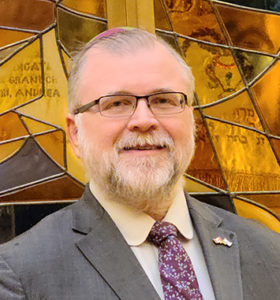
Rabbi Russell Jayne
By Rabbi Russell Jayne
(Calgary) – Every year, as Hanukkah approaches, we return to the familiar story of the Maccabees, the rededication of the Temple, and the small quantity of oil that miraculously burned for eight days. We speak of courage, perseverance, and the triumph of light over darkness. But perhaps there is another lesson hidden within the Hanukkah story. One that can speak to the world in which we are currently living.
Hanukkah reminds us that something does not have to be perfect to be holy.
Consider the circumstances of the original Hanukkah story. The Temple in Jerusalem had been desecrated. Its sacred spaces had been violated, its rituals interrupted, and its people deeply wounded. When the Maccabees reclaimed the Temple, they did not inherit a pristine sanctuary. They inherited something broken that needed to be restored. And yet, they did not wait for everything to be perfect before beginning again.
They cleaned what they could. They repaired what they could. They found what little oil remained and rekindled the menorah. That was enough to begin.
 The Hebrew word Hanukkah means dedication. What we celebrate is not the creation of something new, but the rededication of something once broken. We commemorate, every year, the idea that something that was profoundly damaged could, once again, become a place of profound holiness.
What a beautifully hopeful message.
Rabbi Nachman of Breslov taught that if we believe something can be damaged, we must also believe that it can be repaired. His teaching reminds us that brokenness is never, and must never be, the last word of any story.
Indeed, much of Jewish spiritual life is built around the understanding that we are always repairing, always rededicating, always becoming something other than what we currently are. It is this recognition that we can continually rediscover and renew our relationship with ourselves, with others, and with the Divine that has made us a people of eternal hope.
Perhaps this idea of constant repair and renewal is also the reason why we light the Hanukkah candles progressively. Following the tradition of Beit Hillel, we begin with a single flame and add another each night because we do not demand eight flames on the first evening. We allow the light to grow.
For both our Jewish communities, and for each of us individually, this is a message worth embracing. We need not have resolved every disagreement, healed every wound, or answered every difficult question before we can begin to build something sacred together. Sometimes the most courageous thing we can do is simply begin again, with whatever light we have.
This Hanukkah, may we find the courage to embrace our unfinished lives, the compassion to accept one another’s imperfections, and the hope to believe that what is broken can be made holy once again.
Chag Urim Sameach! May the Festival of Lights illuminate not only what we are, but what we may yet become.
Rabbi Russell Jayne is Senior Rabbi and Cantor of Beth Tzedec Congregation in Calgary.

Be the first to comment on "Rabbi Russell Jayne: A holiday for repair, renewal and rededication"