

By Mark Cooper, Local Journalism Initiative Reporter
(AJNews) – A chance encounter under a Calgary sukkah just hours before the October 7, 2023, Hamas attacks inspired a groundbreaking initiative that’s providing shelter from rising campus antisemitism while boldly staking a claim to Jewish belonging at the University of Calgary.
On October 6, 2023, beneath the fragile, temporary roof of that sukkah outside Calgary’s Paperny Family Jewish Community Centre (JCC), two University of Calgary faculty members struck up a casual conversation.
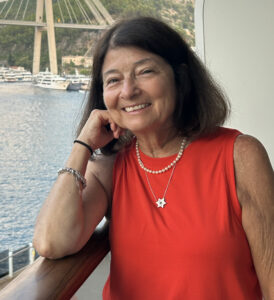
University of Calgary Assistant Professor Emeritus Cynthia Prasow
Cynthia Prasow, an assistant professor emeritus at the Werklund School of Education and Dr. Josh Goldstein, an associate professor of political science, had never met before.
They exchanged contact details with the polite, non-committal promise to “get together sometime” shared by busy academics.
Less than 12 hours later, the terrorist attacks reshaped the world, plunging Jewish students, faculty and staff across campuses in the West into a sudden, hostile storm of campus isolation.
For Prasow, the education building that she had worked at for 40 years felt like a lonely island at the far end of the sprawling campus.
“I was never one who thought about my identity. I would just go about my life,” said Prasow.
“Now I was examining all the (professional) relationships with people who I have known for years. I started to watch who it was in my faculty that would say something and who would say nothing.”
On the other side of campus, Goldstein watched as some at the university treated a community-wide trauma as an abstract exercise in social justice.
“October 7th happened and it felt like a sledgehammer hit you,” said Goldstein.
“All of a sudden, you are profoundly aware of who you are in either a place that doesn’t care or is actively hostile and you’re not having the same experience other people are having.
“They’re not seeing this in the same way that Cynthia and I and every other Jew on campus, more or less, is seeing this as an attack on our community, a devastating tragedy that had just occurred.”
From a chance meeting to a campus movement
In the days that followed, Prasow found herself thinking about the people she had met under the sukkah roof. She tracked down their contact information and reached out to Goldstein and a few others, suggesting they meet in a boardroom in the education building.
The gathering would become the first step toward creating the University of Calgary Jewish Community Committee (UCJC). In the months that followed, what had begun as an effort to ensure Jewish faculty, staff and students did not feel alone evolved into something larger: a community of roughly 90 Jews and allies across campus who found renewed pride in openly expressing their Jewish identity and launched a range of initiatives unlike any seen at a Canadian university.
In just two years, the committee evolved far beyond a support network. Members secured funding for major academic and public education initiatives, strengthened relationships with senior university leadership, and fostered new cultural, scholarly and interfaith collaborations to deepen Jewish life across campus.
For Goldstein, it was immediately evident that Prasow was a “natural leader” and “the spine” of the committee.
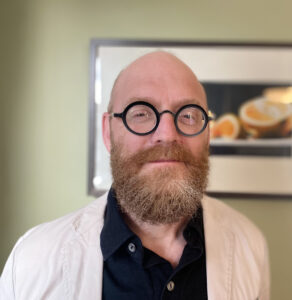
University of Calgary Associate Professor Dr. Josh Goldstein.
Much of what Prasow brought to the UCJC was rooted in her professional experience. After years helping students navigate crises, accommodations, complaints and university bureaucracy, she knew how to find supports, escalate concerns and guide people through complex institutional processes.
“Here is a person who knows what it is to take charge, knows the next steps that you have to do,” said Goldstein.
For him and others, meeting in a campus boardroom carried symbolic weight. Rather than withdrawing to off-campus spaces, they chose to gather in the heart of the university, asserting their place in the institution and their right to participate fully in its intellectual and civic life.
“We weren’t just meeting at some coffee shop off campus. That was a really important thing. It was like ‘We can be here and be proud.’”
An unexpected ally in the EDI office
Soon after that meeting, a letter signed by 75 people was sent to University of Calgary President Ed McCauley and other senior members of the administration requesting that rising campus antisemitism be confronted.
Recognizing the tightrope universities will often walk on various contentious social justice issues, expectations were kept in check that action would be immediate and forceful.
Prasow and Goldstein were pleasantly surprised. Copied on the president’s response was Dr. Malinda Smith, then Vice-Provost of the university’s Equity, Diversity and Inclusion (EDI) department.
A prominent and high-profile figure in EDI across Canada, Smith had studied antisemitism over her career, including while researching her PhD, during her teaching, and as a member of the City of Edmonton’s anti-racism committee.
Despite a general perception among some committee members that EDI offices can be indifferent or hostile toward Jewish communities, she welcomed the committee, met with them, and listened deeply and sensitively to their concerns.
“To her absolutely enormous credit, she was this incredibly generous, sensitive person that we could talk to,” said Goldstein.
“She opened her doors to us. She was able to listen to our concerns in not just a formal way, but to really listen and really think through our concerns to be a really smart, thoughtful interlocutor.”
She put real “wind behind the sails” of the committee by allocating financial resources from her own office’s budget at a critical time when she was under no formal obligation to do so.
“She could have so easily closed the door on us, said the right empty phrases and not have anything go forward.”
Instead, she provided the initial seed money to establish and set up the university’s Holocaust Memorial lecture.
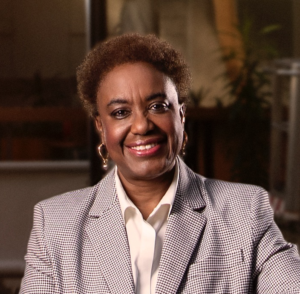
Former Vice Provost of EDI, Dr. Malinda Smith.
Getting emotional after hearing what Goldstein and Prasow said about her, Smith instead spoke about what she gained through the experience of meeting with the committee.
“I feel maybe like I’m the lucky one,” said Smith, now the university’s associate vice-president research (EDI). “I’m fortunate that I had colleagues who were so generous with their time … and who wanted action but also were prepared to take the time to do it right, and in a way that was sustainable.”
For Smith, creating safe and inclusive spaces meant ensuring that Jewish colleagues were not only free from discrimination, bias and hostility, but also felt welcomed, valued and eager to come to campus each day to continue the work they loved.
Swift action against campus encampments
Empowered by the support they received, the UCJC continued to work on their initiatives. Early days were a bit frenetic, admitted Prasow.
“I’ll tell you that for the first few months, and even well into 2024 it was a whack-a-mole job,” said Prasow.
Perhaps most pressing was the committee’s determination to ensure Jewish students, faculty and staff did not face the intimidation and hostility that had emerged around pro-Palestinian encampments at some other Western universities.
As encampments took shape at campuses across the United States, McGill University and at the University of Toronto, the committee wrote to President McCauley seeking clarification on how the university planned to respond should similar efforts emerge at the University of Calgary.
“They never answered back, but what we didn’t know was that behind the scenes they were already dealing with it and had contingency plans,” said Prasow.
In fact, when anti-Israel protesters tried to set up an encampment on campus in early May of 2024, the U of C issued trespass notices to the protesters, and it was almost immediately dismantled by police.
In the committee’s view, few North American universities responded as swiftly. Members also recognize that President McCauley accepted significant reputational risk, particularly among some dissenting faculty, and remain appreciative of the leadership he and the administration demonstrated.
Building a new course from the ground up
Further empowered, the committee continued, working to scrape together resources for other initiatives, including additional funding for some initiatives from the Jewish Community Foundation of Calgary.
Most notably, plans began to introduce a course on the politics of antisemitism, an effort that required navigating a sprawling university bureaucracy with no dedicated funding and little institutional infrastructure to support the work.
Fortunately, they found a sympathetic ear in Dr. Aoife Mac Namara, then Dean of the Faculty of Arts, who was willing to provide money from her office to hire a sessional instructor to teach the course.
“All that happens out of their own willingness to listen and their own willingness to write a cheque when they’re surrounded by hundreds of people who also want cheques written for their own particular projects, which they think are equally worthy,” said Goldstein.
The Politics of Antisemitism course would then be built from the ground up by committee member Jamie Michaels, a postdoctoral fellow at the University of Calgary.
“For this course I wanted students to think how antisemitism functions politically, how governing parties and bodies of politics have leveraged antisemitism over time to better suit their agendas and especially in the terms of understanding antisemitism as conspiratorial,” said Michaels.
Taught for the first time in the spring of 2026 through the Faculty of Arts, the course was in high demand, with students quickly filling up all 50 spaces and a waitlist of five.
The appeal was widespread. In fact, Michaels was proud that of his top three students, one was Jewish, one was German and one was Palestinian, all of whom he said took a risk by taking the course and having their preconceived notions challenged.
“I think that when we come to these really contentious moments in today’s current political climate, there’s a lot of pressure for us to have an expert opinion and be right,” said Michaels.
“And I think that framing of trying to be right, instead of trying to be curious, hamstrings our ability to learn. So, I’m really proud of these students for taking a risk, for stepping up a little bit outside of their comfort level.”
Michaels is working now to secure stable funding so the course can continue to be taught, something he thinks is now possible because of the work of Prasow, Goldstein and the UCJC.
“I myself am particularly grateful, not only for the leadership of Josh and Cynthia, but also learning how to lead from them has been an important thing for me.”
Giving Jewish students a voice
Yet for all the committee’s successes, members are quick to acknowledge that concerns about antisemitism have not vanished from campus.
What has changed, according to some Jewish students, is the sense that they are no longer facing those challenges alone. The committee’s leadership has provided an important measure of support, advocacy and reassurance during a period of significant uncertainty.
Liz Pereplyotchik, co-president of Calgary Hillel, the official Jewish student organization on campus, said that although many Jewish students still encounter an atmosphere of tension and occasional hostility, the UCJC has given them a voice within the university by creating avenues for their concerns to be heard by both administrators and committee members.
“It’s created for me a sense of comfort just knowing that I have another group of people that will help me if I need it and that have my back on and off campus. It’s just huge,” said Pereplyotchik.
A pragmatic approach to belonging
For Prasow, a long-serving volunteer in Calgary’s Jewish community, it was work that just needed to be done.
“I don’t even think about why I do it,” she said. “I do it because it’s important and we all must step up and we step up in different ways. I’ve always felt it’s very important who we are.”
For Goldstein, the committee’s work is a natural extension of his long-standing pride in being part of the university. Through these efforts, he hopes to help ensure that everyone on campus can continue to feel that same sense of belonging and pride.
“We’re kind of lucky here at the University of Calgary. Like the City of Calgary it’s a pragmatic place, a let’s-just-do-it kind of place and a little less ideologically driven.
“And so, there’s fewer obstacles to overcome because both the students and the administration aren’t approaching these issues in such an ideological way.
“We’re at a special place here at the University of Calgary and it shows in what we’ve been able to accomplish. It’s not because we’re necessarily so brilliant or so strategic. It’s that we’re dealing with pragmatic people who honestly want to make the university a better place for everyone.”

Be the first to comment on "Building Belonging: A grassroots committee is reshaping Jewish life at UCalgary"