

(MJL) – In 2026, Tisha B’Av begins at sundown on Wednesday, July 22 and ends at nightfall on Thursday, July 23. It is the saddest day of the Jewish calendar, marking the destruction of both the First and Second Temples in Jerusalem, along with other major historical tragedies
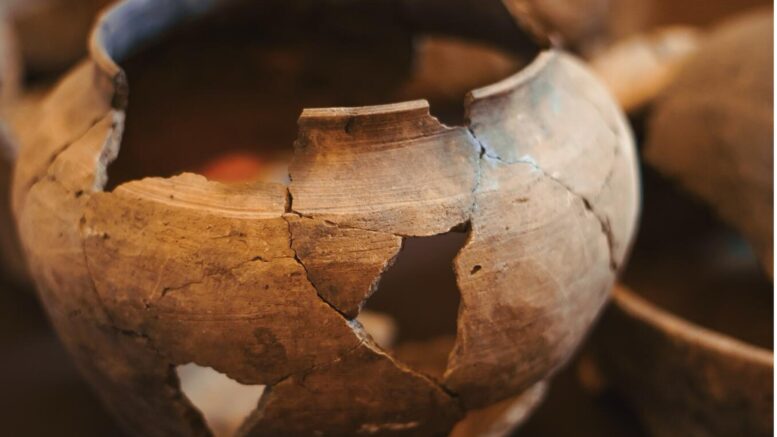
The precious children of Zion, once valued as gold — alas, they are accounted as earthen vessels, the work of a potter’s hands (Lamentations 4:2).
This is one of countless lines in Lamentations, or Eicha, mourning all that has been lost and destroyed. The prophet Jeremiah grieves a people who no longer recognize themselves. Jerusalem has fallen. The Temple lies in ruins, and with it, the future the people had imagined. Everything that once seemed stable and enduring now appears broken, ordinary, diminished.
The verse carries a tone of bewilderment, anguish — even humiliation. The people, once compared to gold, now find themselves compared to heres, or clay. Perhaps the difference between gold and clay here is more than symbolic.
To be valued as gold is to be associated with what is precious, enduring, and rare. Gold dazzles. It resists corrosion. It is treasured because it seems to exist outside the ordinary forces of time. Clay, by contrast, is imagined as common. It comes from the earth beneath our feet. It can be softened, shaped, cracked and remade. Clay is porous. In the realm of kashrut, dishes made purely of gold can be kashered, regardless of what has touched them, but clay cannot. Clay dishes are permeable, thought to absorb flavors and particles from food. Clay is shaped by what it encounters.
Read today, the words of Eicha resonate anew. We, too, are grappling with the realization that we are not precious in the ways we might have imagined – untouchable, held apart. We, like the generation recounted in Eicha, have been shaped by the forces of history and time. War, exile, violence and loss continue to leave their mark.
Something in this Eicha verse is so inherently painful. We long to believe ourselves to be the most special, unable to be harmed, and imagine that this was the marker of God’s love. We ask: Does our vulnerability mean that God has scorned us and turned away? Did God ever love us? Is there even a God at all?
In This Is Real and You Are Completely Unprepared: The Days of Awe as a Journey of Transformation, Rabbi Alan Lew (z”l) suggests that Tisha B’Av marks the beginning of the spiritual journey that culminates in Rosh Hashanah and Yom Kippur. The path toward teshuvah, repentance or return, does not begin with confession or forgiveness. It begins with grief. Before we can return to one another, to ourselves and to God, we must first allow ourselves to know and to feel what is true in the present: all that has faded, cracked and crumbled in our lives and in our world.
Yet, if we remain with that truth long enough, the anguish of Eicha begins to yield something unexpected.
What first feels like humiliation and shame gradually reveals itself as a gift. Once we recognize ourselves as earthen vessels, we can understand ourselves as part of the very earth itself. Unlike gold, which is prized for its purity, clay is an amalgam of iron, soil, stone, water, trace materials and impurities, such as decayed plant matter and bone. Perhaps seeking purity was never what was required; rather, the full embrace of all that is — all that we are — is what is needed. We are constituted by many elements: encounters, experiences and energies that make us who we are. And who we are is precious.
The image of us as earthen vessels does not disappear after Tisha B’Av. It waits for us in the liturgy. A few short weeks later, in the quintessential piyyut, or liturgical poem, of the High Holiday season, we willingly place these words upon our own lips: Ki hiney ka chomer — for we are the clay.
What was first spoken as a lament now becomes a foundation for prayer, forgiveness and reconnection to the Divine. The image has not changed, but our relationship to it has. Humbled, regrounded and restored, we are earthen vessels open to renewal.
This article is reprinted from My Jewish Learning.

Be the first to comment on "Renewal begins with grief"