

By Regan Lipes, LJI Reporter
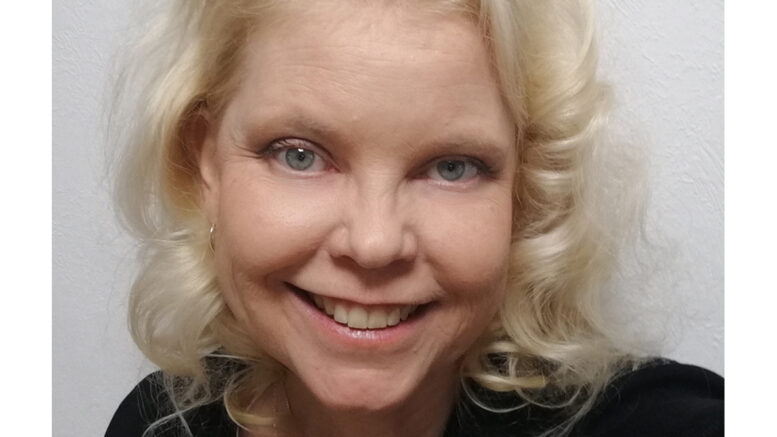
(AJNews) – This year, the City of Calgary recognized seven exceptional short-listed nominees as contenders for their International Achievement Award. Since 1994, this local civic recognition is bestowed upon an exceptional contributor to the vibrance, vitality, and richness of Calgary’s global image. Dr. Melanie Carina Schmoll, a longtime friend and ally of Alberta’s Jewish communities was among these seven incredible trailblazers. “I felt like being nominated was already a win,” Dr. Schmoll told the Alberta Jewish News in an interview direct from her German home-base in Hamburg. “Being nominated is a validation of the work I’m dedicated to, and I’m just incredibly honoured to have this recognition.”
Dr. Schmoll considers Calgary her second home and spends a considerable amount of time there engaging with the local Jewish and academic communities. “Calgary feels like home in so many ways because the University of Calgary is where I’m affiliated academically and professionally. As a scholar, my work is such a crucial part of who I am, and Calgary is at the centre of this.”
In May of 2025, Dr. Schmoll spoke at the University of Calgary as part of a seminar “Teaching the Holocaust in Turbulent Times,” and was the keynote lecturer in commemoration of Kristallnacht later in November delivering a talk titled: “Night of Broken Glass: A Reminder, a Warning, a Lesson.” In 2025 she was also a guest speaker in Edmonton, at the University of Alberta’s Wirth Institute for Austrian and Central European Studies in conjunction with their Jewish Studies Week programming and she visited MacEwan University in 2026 to talk about her book Hatred of Jews: A Failure of Holocaust Education? to mark International Holocaust Remembrance Day.
“Education must address the hatred of Jews in its respective function in a historical longitudinal section, and the different forms must be explained. The personal approach should be taken but also the recognition of hatred of Jews as a social power relationship as a social and structural phenomenon. Just as hatred of Jews was not the only reason for the mass murder of the Holocaust, Holocaust education cannot be the only way to combat hatred of Jews. There is no mono casualty in either realm” (Schmoll 184).
Dr. Schmoll has devoted her career to investigating how educators in Canada, Germany, and Israel pass along knowledge in an impactful way from generation to generation. For her, this has always been a labour of love, and one that connects to her own negotiation of cultural inheritance as a German. In a 2025 interview with AJNews, Dr. Schmoll explained that her current work began to take form after she was entrusted with teaching children at a Hamburg-based Jewish school about the Holocaust. She recalled the dissonance she felt as a German teacher, instructing Jewish youth who had been listening to the testimonies of survival from grandparents for most of their lives.
“This is not an award specific to the Jewish community or Holocaust studies,” explained Dr. Schmoll. “I think that’s what also makes it so meaningful, because it means the City of Calgary sees what is being done to further impactful education. I think it shows that they understand the value in addressing how we as educators and communities approach topics surrounding hatred of Jews.” Dr. Schmoll’s observation is quite accurate, as the other six nominees she shared the short list with were from wildly diverse backgrounds.
Dr. Schmoll’s book speaks to contemporary learners who understand that there have been deficits in their Holocaust education either because of a lack of instructor training, or ineffective pedagogical approaches. Hatred of Jews: A Failure of Holocaust Education? was showcased as the theoretical foundation for a recent presentation at MacEwan University’s annual Student Research Day on April 23. Undergraduate researcher, Tamara Tower, found Dr. Schmoll’s examination of contemporary Holocaust education as a potential contributor to antisemitism so moving that she used this methodology to analyze how literature can factor into new pedagogical undertakings in a capstone project titled: Healing and Education Through Holocaust Literature: How Storytelling Heals and Helps Bridge the Gap in Holocaust Education. Tower’s scholarly examination was also presented at Mount Royal University’s inaugural Canadian Undergraduate Research Excellence Conference in May, further illustrating that Dr. Schmoll’s work is becoming a staple of discussions of Holocaust education across Alberta.
Dr. Schmoll tuned in for the official award ceremony from Germany on June 17 and although she was not this year’s recipient, securing a spot on the City of Calgary’s short-list was already a victory in her eyes. Prior to the official announcement she noted: “I really do already feel like a winner just because I was selected for their short-list. There are so many nominees in this category each year, and I know that just being part of this elite group is a huge honour all on its own.”
Dr. Schmoll’s recognition as a short-list candidate for the 2026 City of Calgary’s International Achievement Award is not just a feather in her own scholarly cap, but an indication that even outside of the Jewish and academic communities, discussions around antisemitism and responsible Holocaust education are beginning to take centre stage. The Jewish communities of Alberta send Dr. Schmoll a hearty Mazel Tov on her short-list nomination, and hope that she will be a successful recipient of this honour in the future as her work continues to inspire and catalyze change for Alberta’s students and educators.

Be the first to comment on "City of Calgary honours Dr. Melanie Carina Schmoll with prestigious nomination"