


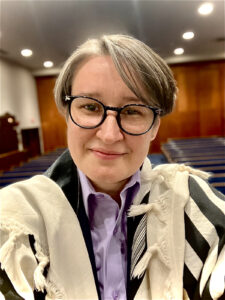
Rabbi Alisa Zilbershtein
By Rabbi Alisa Zilbershtein
(Edmonton) – Shanah tovah u’metukah! A good and sweet year! This is our traditional greeting that carries a slight edge because we also know that Rosh Hashanah is the day of judgment. The oldest description we have of a community observing the day is in the Book of Nehemiah, and it begins in tears.
The exiles have come home from Babylon and gathered in the square before the Water Gate. “On the first day of the seventh month, Ezra the priest brought the Teaching before the congregation, men and women and all who could listen with understanding.” (Nehemiah 8:2)
When people heard the teaching, they broke down in tears. They realized what they were meant to be, and how far they had drifted. But Nehemiah offers them these words of comfort: “This day is holy to the Eternal your God: you must not mourn or weep (…) Go, eat choice foods and drink sweet drinks and send portions to whoever has nothing prepared, for the day is holy to our Sovereign.” The day of judgment is declared a feast day, not a time to cry.
On the other side of the emotional ledger we have a teaching from the Talmud. The tractate Rosh Hashanah records that the ministering angels came before the Holy One with a complaint: why does Israel not sing Hallel (praising hymns) on Rosh Hashanah and Yom Kippur, as they do on every other festival? And the Eternal answers them: is it possible that the King sits on the throne of judgment, with the books of life and death open before Him, and Israel sings praise songs?
These days carry two opposite instructions: we are commanded to feast, but we are also commanded to tone down our celebration. Why is that? The answer is hidden in the nature of the Days of Awe.
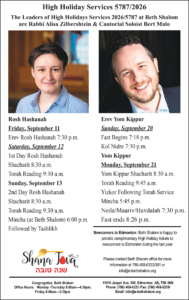 Almost every holiday in human civilization points to an event: a liberation, a birth, a victory, a founding. Nations mark their independence, their revolutions, the birthdays of their founders. Yet no other tradition sets aside its highest holy days for an audit of the human soul.
When our calendar reaches its most sacred days, we do not celebrate a victory, commemorate a hero, or even retell the story of a miracle. We place ourselves on trial. Once a year, the Jewish tradition asks each individual to account for the life they have lived: what have I done, whom have I harmed, what have I neglected, and what kind of person have I become? We made the examination of a human life into a sacred communal obligation and placed it at the very height of our year.
And perhaps an honest audit of the human soul cannot produce a single emotion. If we look carefully enough, we will find reasons for grief and reasons for gratitude; things we wish we had done differently and things that make another year worth welcoming.
That is why Nehemiah tells a people who have begun to weep: “Do not be sad, for your rejoicing in God is the source of your strength.” Their tears are understandable, but grief is not where they are meant to remain. The purpose of seeing the distance between who we are and who we ought to be is not to condemn ourselves. It is to make change possible.
Rosh Hashanah and Yom Kippur ask the hard question – what have you made of yourself this year? – and then set honey down beside it.
Rabbi Alisa Zilbershtein is Rabbi at Beth Shalom Congregation in Edmonton.

Be the first to comment on "Rabbi Alisa Zilbershtein: The day we were told not to cry"