
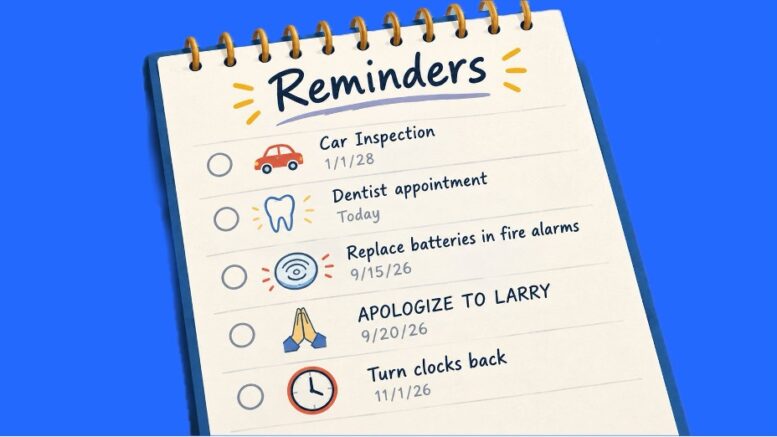

Apologies need to come from the heart, not the clock, writes a teacher at Hadar.
by Rabbi Matthew Anisfeld
(JTA) – We live in the age of the strategic apology. A politician apologizes days before an election when an opponent surfaces uncomfortable dirt. A CEO issues a lawyered “I take full responsibility” when a product is recalled over safety concerns. A public figure, cornered by a surprise video, expresses regret for an act of infidelity. The apology arrives not when the offender finally understands the harm they caused, but when the calendar, the news cycle, or the PR firm says it’s time.
We’ve become fluent skeptics of these statements. We spot the passive voice (“mistakes were made”), the conditional remorse (“if anyone was offended”), the timing that reeks of strategy rather than sorrow. We know, instinctively, when an apology is really just an act of self-preservation.
Long before apologies became a feature of crisis communications, Jewish tradition was asking a deceptively difficult question: What makes an apology an act of repair rather than an act of self-relief?
With Yom Kippur falling on Sunday evening, Sept. 20, Jews around the world are in a season that puts personal reconciliation at the center. Jewish law stipulates that the holiest day of the year, Yom Kippur, cannot bring atonement for the ways we’ve wronged each other unless we’ve first gone to the people we hurt and made it right. Before you can be forgiven by God, you have to face the person.
Over the centuries, this condition of our atonement transformed into a custom: seeking forgiveness specifically on the eve of Yom Kippur, the one day before the holiday when the pressure to clear your conscience peaks. And yet two old rabbinic stories traditionally associated with this practice tell a more complicated story.
One tale, recorded in the Talmud, tells of Rav, one of the towering rabbis of the 3rd century, who had let a rift with a local butcher fester for months. Finally, on the eve of the holy day, he decided the time had come to make peace. Another sage, Rav Huna, saw him on his way and warned him that he was acting recklessly. He was right. The butcher looked up from his work, recognized Rav, and said he had nothing to say to him. Moments later, in a fateful twist, a bone fragment flew up and killed the butcher. The reconciliation never happened.
The very next passage of the Talmud is just as unsettling. Rav had a falling-out with a fellow sage, Rabbi Hanina, and for more than a decade showed up on the eve of the holy day asking to be forgiven. Every year, Rabbi Hanina refused him. The Talmud doesn’t praise Rav’s persistence. Instead, it registers discomfort, even citing a teaching from Rabbi Yose bar Hanina that one should not ask for forgiveness more than three times. Past that point, the tradition suggests, the question is no longer simply why the injured person has not forgiven, but what the apologizer is seeking in continuing to ask.
It would be tempting to write off the first failure as a case of insincerity, an apology tacked on too late and offered without real remorse. But the second story resists that reading. Nothing in the text suggests Rav’s decade of requests was hollow; if anything, his persistence reads as evidence of genuine feeling. The problem wasn’t a lack of sincerity. It was that even heartfelt contrition, repeated on the same fixed night every year, can devolve into a private ritual rather than an act of attentiveness to the other person. Asking earnestly, on your own schedule, year after year, is still asking on your own schedule.
Read plainly, these are strange stories to build a ritual around. Why would anyone extract “you should definitely do this” from two tales in which the apology fails, and fails badly? A more honest reading may be that they were preserved as warnings, not instructions. They dramatize what happens when an apology is driven by the apologizer’s timeline instead of the wronged party’s readiness. It lands as hollow, it can backfire, and sometimes it doesn’t land at all, no matter how much the apologizer means it.
This dynamic isn’t unique to Judaism. It reveals how human apologies actually work. When an apology stems from a desire to clear your own conscience, even a well-meaning one, the recipient can often sense that self-focus. The butcher could tell. Rabbi Hanina, after ten years, could clearly tell. An apology built around the apologizer’s timeline rather than the injured party’s readiness doesn’t heal anything. It performs healing, on a schedule convenient for the one who caused the harm.
This cuts against almost everything our culture rewards. We live in a world that treats apology as crisis management, something to be issued quickly and then be put behind you. Speed is treated as sincerity. “At least they said something” has become the bar.
But genuine reconciliation doesn’t run on a news cycle. It runs on the injured party’s timeline: their readiness to be approached, their capacity to hear it, their sense of whether the apology is for them or for the person delivering it.
None of this means timing never matters. A fixed occasion — like the eve of Yom Kippur — can be the nudge that finally gets someone to pick up the phone after months of avoidance. For some people, the only apology they’ll manage is one pushed by an approaching deadline. That apology can still matter to the person receiving it. The danger isn’t having an occasion for reflection. It’s mistaking the occasion for the substance, treating the deadline as the goal rather than the chance to finally face the person you hurt.
The test, then, isn’t when an apology arrives, or even how sincerely it’s meant. It’s who it’s actually for. An apology built around the offender’s need for absolution tends to be sensed as such, and rejected, as it was by the butcher and by Rabbi Hanina in those old stories. An apology built around genuine attention to the other person’s pain has a chance of actually working, whatever day it lands on.
As Yom Kippur approaches and the familiar rhythm of publicly scheduled contrition continues to play out in press statements and talk show interviews, it’s worth remembering what the ancient stories warn: A date on the calendar might prompt us to reach out, but it can’t do the work of repair for us.

Be the first to comment on "Yom Kippur puts forgiveness on the calendar. Real repair doesn’t work that way."