
by Maxine Fischbein, Local Journalism Initiative Reporter
(AJNews) – History is about to be made in Alberta as Calgary physician Kathleen Moncrieff becomes the first woman to perform circumcisions in this province as a trained and certified Mohelet (a woman trained in Brit Milah, the ritual circumcision of Jewish baby boys).
Moncrieff is one of 14 doctors set to graduate from the Union for Reform Judaism’s Brit Milah Program, also referred to as the Bris Program, and plans to hang out her shingle within the next couple of months.
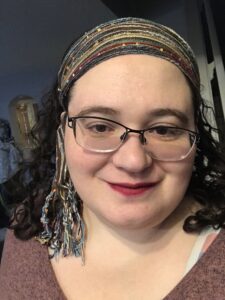
Calgary’s Dr. Kathleen Moncrieff will soon become Alberta’s first mohelet.
Dr. Moncrieff earned her medical degree from the University of Calgary in 2014 following an earlier career as an astrophysicist.
She was attracted to medicine because it allowed her to combine her love of science with her love for spending time with people.
In addition to practicing as a GP, Moncrieff instructs medical students in the same teaching clinic where she did her residency in family medicine.
Dr. Moncrieff is similarly enthusiastic about educating patients.
“There is a lot of health education involved in being a doctor. Some of my favourite moments with patients are when they have a question about something,” said Dr. Moncrieff, who adds that she especially loves those moments when she sees her patients’ “eyes light up” after they have learned something important about their own bodies.
A General Practitioner who enjoys performing surgical procedures, Moncrieff is thrilled that she will have the privilege of performing Brit Milah, thus engaging in a surgical procedure for happy reasons, something she says is a rare privilege for most physicians.
She and her Mohel/et cohort – most of whom are American– hail from a variety of medical specialties. There are pediatricians, OBGYNs, urologists, and pathologists who share at least two things in common. As required by the Brit Milah Program, all are proficient in performing neonatal circumcisions and each, says Moncrieff, shares a passion for using their medical skill to perform a time-honoured Jewish mitzvah.
“Everybody’s come to it from a place of, ‘Yes, I have these medical skills, and it would be cool if I could do something Jewish with them’,” Moncrieff told AJNews.
Doing Jewish is relatively new to Moncrieff, a graduate of Temple B’nai Tikvah’s conversion class just a couple of years ago.
Having grown up Mormon, though not part of a Mormon extended family, Moncrieff describes both sides of her family as “a bunch of Christians or former Christians who “tend to be very supportive of people finding where they belong religiously.”
Moncrieff, who began her post-secondary education at Brigham Young University in Utah, left Mormonism some 15 years ago.
“I explored a few other versions of Christianity on the way out and then just kind of landed on nothing,” recalled Moncrieff who had an interest in Judaism, having known Jewish people including a couple of relatives by marriage.
“It didn’t really occur to me that conversion was something I could do, or something I would want to do,” said Moncrieff, adding that the COVID-19 pandemic changed everything.
With regular routines disrupted due to the contagion, Moncrieff had the opportunity to do a great deal of reading.
A book she had previously read during her medical residency – at the advice of a hospital chaplain – was Rabbi Harold Kushner’s When Bad Things Happen to Good People. While re-reading Kushner’s classic, Moncrieff realized she wanted to learn a whole lot more about Judaism.
Moncrieff thought about taking Temple B’nai Tikvah’s Introduction to Judaism class but learned that, out of an abundance of caution, the Temple had opted to deliver the program online during the pandemic. Because she was already feeling “Zoomed out,” Dr. Moncrieff put her aspiration on hold, but jumped in with both feet when Rabbi Mark Glickman resumed in-person classes.
“I remember walking into the library on the first day of the class, and I had no idea what to expect,” recalled Moncrieff, adding, “It immediately felt like home to me in a way that I didn’t understand then and don’t even really understand now.”
Knowing she had found her spiritual fit, Moncrieff converted and subsequently became active at Temple. She currently serves on its board of directors and its social committee.
Although Dr. Moncrieff did not want to embrace the lifestyle of a surgeon, she enjoys doing surgical procedures and looks forward to participating in a mitzvah she describes as a joyous intersection between her professional and spiritual lives.
“I sought out every opportunity in my training to learn how to do those things that would be in my scope of practice as a GP, including circumcision,” said Moncrieff, who cannot wait to perform Brit Milah, something she describes as “profound and sacred.”
“It is one of the oldest mitzvahs that we have been continuously practising for thousands of years,” said Moncrieff, adding that it is a privilege to be there with a family during “one of their baby’s earliest Jewish moments.”
Already skilled and confident in performing infant circumcision – a prerequisite for those entering the Brit Milah Program – Moncrieff says the 10 mandatory Zoom sessions provided by learned scholars gave her a deeper appreciation of the history and meaning of Brit Milah dating back to the covenant God made with Abraham.
“God would be our God, and we would continue to be God’s people,” explains Moncrieff, adding that when you perform Brit Milah, “…you reenact that moment…making that family part of that promise.”
Throughout the Bris Program, participants are guided through the spiritual and religious aspects of circumcision and the practicalities of performing a surgical procedure in a non-surgical environment.
From learning about how to manage a surgical procedure in someone’s home or synagogue to helping family members feel comfortable, there are myriad details to master, Moncrieff says.
These days, adds Moncrieff, many parents are unsure about circumcision, a medical procedure that has become increasingly controversial in some countries around the globe.
“I don’t have children,” said Moncrieff. “If I were to have a baby boy, and having seen what I’ve seen as a physician, I would have them circumcised even if I wasn’t Jewish.”
“While it’s not common, it’s not super rare for someone to need it done when they’re older, and I’ve seen bad cases. I would personally want to prevent that,” Moncrieff added.
The Bris program provides an excellent grounding in how to help ensure that already stressed young parents are comfortable with the ceremony, especially those who are converts to Judaism and need guidance on “…how to include non-Jewish family members and interfaith families in appropriate ways,” Moncrieff says.
It may well be reassuring to some members of the community – especially mothers – to put the mitzvah of Brit Milah in the hands of a Mohelet, says Rabbi Glickman, who recommended the Bris Program to Dr. Moncrieff and has provided mentorship and support to her throughout her studies.
“My hope is that having a woman perform the procedure will bring added comfort and reassurance to some of the mothers who might otherwise be more uncomfortable with this,” Rabbi Glickman said.
“I am excited that Kathleen is doing this through the Reform movement and, particularly, in our congregation…. I think this will resonate also with a broad band of Conservative Jews,” said Rabbi Glickman. “This adds to the diversity of people who are performing this ritual and that is of great value.”
Business is likely to be bris(k) for Moncrieff who looks forward to teaming up with Rabbi Glickman and other clergy willing to team up with a Mohelet.
Once she is certified by the URJ, Dr. Moncrieff can perform all the ritual aspects of Brit Milah, as well as the circumcision itself.
Moncrieff told AJNews that she can play a vital role when it comes to serving unaffiliated families.
“There are going to be some liberal Jewish families who maybe aren’t at a point where they want to get involved with a synagogue yet,” said Moncrieff, adding that her ability to fly solo means that she can also be of help on those rare occasions when congregational Rabbis are unavailable.
Moncrieff has already felt the support of her Brit Milah Program classmates and looks forward to her membership in NOAM (the National Organization of American Mohalim), established in 1988 by the Brit Milah Board of Reform Judaism to provide continuing education and support to their Mohalim.
Dr. Moncrieff can also find advice and support from a NOAM member a little closer to home.
Former Edmontonian Dr. Ariel Isackson, who moved to Victoria, BC in September, graduated from the URJ Bris Program in 2022. During an interview with AJNews last month, Isackson, who was born and raised in Edmonton, was delighted to hear that Alberta will soon welcome Dr. Moncrieff as its most recently minted Mohelet.
Like Moncrieff, Isackson is a family doctor who performs minor surgical procedures. He earned his medical degree in Debrecen, Hungary in 2016, later reaching out to Ottawa physician Dr. Lisa Rosenkrantz – a skilled and busy Mohelet – on the advice of an Ontario colleague who had studied circumcision with her. Dr. Isackson trained with Rosencrantz prior to enrolling in the Bris Program.
Rabbi Glickman has partnered with Isackson for Brit Milah and officiated when he married his wife, Chelsea.
Isackson told AJNews that he would be happy to be a resource to Dr. Moncrieff, and it sounds like he has good tips (pun so intended!) to share.
Exuding gratitude for the honour of serving as a Mohel, Isackson says he receives many interesting calls and has had the honour of helping a diversity of community members including gay couples who have adopted children or gone the surrogate route.
He hopes to continue plying his trade as a Mohel in BC while also traveling back to Edmonton occasionally to perform Brit Milah, a labour of love he refers to as “really rewarding.”
Isackson estimates that he has performed Brit Milah 30 times in Edmonton, sometimes at the request of parents with whom he grew up, occasions that have been particularly special for him.
“I welcome new mohels to the Alberta community with open arms. There’s a huge need,” Dr. Isackson said, adding that he encourages physicians to consider enrollment in the Bris Program to develop the necessary ritual skills.
“To be able to guide families in this tradition and ritual, and for it to be done in a safe and medically guided way that balances both medicine and our traditions, is a very beautiful thing,” Isackson said.
For more information about the URJ Brit Milah Program, go to brisprogram.org/ Contact Dr. Kathleen Moncrieff at drkm.mohelet@gmail.com.
Maxine Fischbein is a Local Journalism Initiative Reporter.

Be the first to comment on "Dr. Kathleen Moncrieff is set to become Calgary’s first Mohelet"