

by JTA Staff
(JTA) — The rumors that you’ve heard are true: A growing number of women are diagnosed each year with breast cancer. Breast cancer diagnoses are increasing at a rate of 1% per year for all women, and at 1.4% per year for women under 50, according to the American Cancer Society.
Fortunately, new technologies are making diagnosis and treatment more effective than ever before, improving breast cancer survival rates even as cases are climbing. Today, the five-year survival rate for all breast cancers is 91% — and that rate rises to 99% when breast cancer is caught in the earliest stages.
And that’s not the only good news. Breast cancer research is constantly evolving, and Sharsheret, the Jewish breast cancer and ovarian cancer organization, is committed to sharing information about the latest cancer research. The nonprofit provides personalized support and educational outreach to Jewish women, men and families living with, or at increased genetic risk for, breast cancer or ovarian cancer.
“Knowledge means power and saves lives,” Sharsheret CEO Elana Silber said. “Sharsheret educational outreach goes beyond just sharing information. Integrating real-time trends into programs and resources, we ensure that women and men can make informed decisions, strengthening individuals’ outcomes and the impact of Sharsheret’s mission to support and empower women, men and families facing cancer.”
While Sharsheret provides genetic and mental health counseling to women and families of all backgrounds, their educational outreach and programs are especially relevant to Jewish families, who carry genetic mutations that cause breast cancer are roughly 10 times more common than among the general population.
Keep scrolling for the latest news about breast cancer research and diagnostic trends.
1. Weight-loss drugs may assist with cancer treatment
GLP-1 receptor agonists — the popular, injectable weight-loss drugs best known by their brand names, like Ozempic and Wegovy — have been hailed as miracle drugs. In addition to enabling weight loss, these medications have also been shown to protect the heart, kidneys and liver.
These new medications may prove valuable when it comes to cancer treatment, too. That’s not only because they help patients lose weight quickly and effectively — which is important because people who are overweight are more likely to have diabetes, and diabetes “may have an increased risk of complications from breast cancer treatment and possibly also have an increased risk of recurrence,” according to Dr. Ruth Oratz, an oncologist at NYU Langone Health who sits on Sharsheret’s medical advisory board. It’s also because these medications have been shown to have anti-inflammatory properties and can reduce lymphedema, swelling caused by an accumulation of fluid from the body’s lymphatic system.
“Patients on these drugs feel better and are healthier overall,” Oratz said during a Sharsheret webinar in February 2025. “They’ve already shown a benefit in reducing the incidence and risk of recurrence of other kinds of cancers.”
2. AI may help improve breast cancer detection
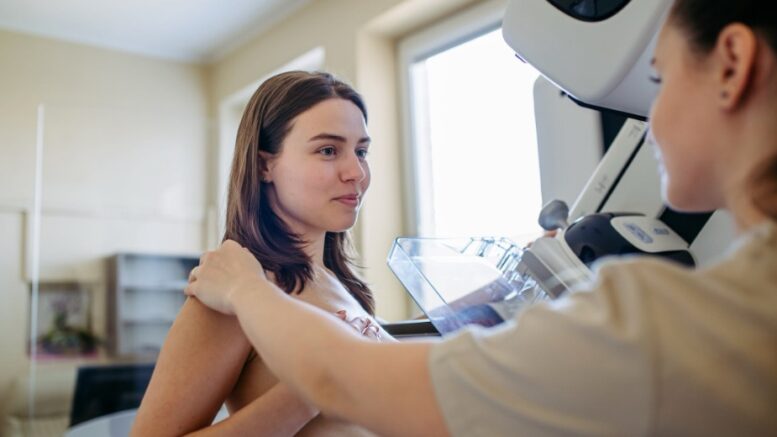
Artificial intelligence is everywhere these days — including at the radiologist’s office, where it is being used to improve both accuracy and efficiency of breast cancer screenings.
According to a recent article on Breastcancer.org, by training on millions of mammograms, AI systems can create a mathematical standard of what “normal” breast tissue looks like, allowing it to spot subtle anomalies that might otherwise escape the human eye. Early research indicates that this digital “second opinion” may help increase breast cancer detection rates by up to 20% while also reducing false positives.
While AI has been shown to be a powerful tool in detecting breast cancer risk, it is not without its downsides. Experts caution that a lack of diversity in data used to train AI may result in less accurate screening results for, say, Black and older women. “There is a lot of bias in AI because there’s a lot of bias in the world, and that pre-existing bias gets embedded in AI systems,” Meredith Broussard, a data journalist and AI researcher at New York University, told Breastcancer.org.
However, AI is designed to enhance the radiologists’ medical expertise, not replace it. “You have to have the radiologist in the driver’s seat, as there is a human element that AI will never have,” breast radiologist Amy K. Patel told Breastcancer.org. “I do think AI is going to help radiologists be much more effective in the years to come.”
3. Biomarkers pave the way for better, more individualized care
An increased understanding of biomarkers — measurable indicators of a biological state or condition, like cancer — is helping medical teams detect cancers earlier and create individualized treatment programs designed to maximize results.
“Breast cancer is not one disease,” Dr. Thomas Buchholz, medical director of San Diego’s Scripps Cancer Center, shared on a Sharsheret webinar last November. “We consider a number of different types of things when people ask, ‘What type of breast cancer do you have?”
Breast cancer cells have specific features, such as proteins, that make the cancer grow in certain ways. Therefore, tests for certain breast cancer biomarkers — estrogen receptors, progesterone receptors and a protein called HER2, which stimulates cell growth — can help determine a course of treatment.
Medical teams “incorporate these biological factors into decisions concerning treatment,” Buchholz said, adding that they also can predict “what is the responsiveness to chemotherapy, what is the responsiveness to radiation, what is the responsiveness to hormonal therapy.”
Today, when it comes to breast cancer treatment, “There’s truly no one-size-fits all,” Dr. Elisa Port, the chief of breast surgery at the Mount Sinai Health System in New York, said during the webinar.
4. Growing awareness of menopause means cancer patients have options
Once considered a taboo subject, menopause is “finally having its moment.” Medical experts are now openly discussing the symptoms and treatments for when a women’s menstrual cycle ends, and celebrities and women’s group chats are hopping on the trend, too.
While menopause is a natural part of aging, some cancer patients take hormone suppression drugs as part of their treatment, which can lead to severe and sudden menopausal symptoms, like hot flashes and loss of libido. Similarly, some women who carry a BRCA gene mutation — which significantly increases the risk of breast cancer and ovarian cancer — may undergo prophylactic surgery, which entails breast and/or ovary removal, sometimes along with removal of the uterus and fallopian tubes, putting the patient into menopause.
“Natural menopause is gradual; surgical or medically induced menopause is intense,” Silber said.
Sharsheret can help women navigate menopause symptoms and treatments as part of their cancer care. “Sharsheret helps support and educate women about what comes next,” Silber said. “We highlight these critical issues so that women know to raise them with their healthcare providers, and we make sure they don’t face those questions alone.”
Among their many services, Sharsheret’s social workers help women make sense of the medical and emotional impact of treatment-induced menopause. Sharsheret also matches women with other women who have gone through the same treatments, providing a real-world perspective on what to expect.
Additionally, the organization provides survivorship kits, educational webinars and tailored materials on myriad issues related to surgically or medically induced menopause — including sexual health, bone strength and fertility preservation, as well as non-hormonal strategies for coping with hot flashes, sleep disruption and vaginal dryness.
5. Genetic testing can save lives
About 5 to 10 percent of cancers “have some kind of inherited component,” according to Peggy Cottrell, Sharsheret’s genetics program manager — meaning that a person is born with a genetic change or mutation that increases their risk of developing cancer.
Probably the best known is the BRCA gene mutation, Cottrell added, which comes with increased risk of breast and ovarian cancer and is more prevalent among Ashkenazi Jews than the general population.
Fortunately, genetic testing — which is typically done via blood or saliva samples — can help determine whether or not a person is a carrier of a cancer-causing gene. “It can help save lives,” Cottrell explained, “because we care for people differently depending on what we find.”
For example, if a person tests positive for a BRCA1 mutation, “instead of the general recommendation — which is to maybe think about getting a mammogram when you turn 40 — we want those people to start with an MRI when they’re as young as 25.”
Who should consider genetic testing? In general, experts recommend screening for those with “triple-negative breast cancer, ovarian cancer, pancreatic cancer, colorectal cancer before age 50, metastatic prostate cancer, or male breast cancer,” according to the National Cancer Institute. In addition, “people with certain personal or family medical histories that suggest the possibility of a hereditary cancer syndrome” should consult with a doctor or genetic counselor.
One thing to keep in mind: It’s important to look at the entire family tree, as men are just as likely to be carriers of these genetic mutations. “This is not only a women’s issue,” Silber told JTA in 2022. “Family history is so important.”
While Sharsheret does not provide genetic testing, they employ genetic counselors like Cottrell who can help explain the process and assist with finding free or low-cost genetic testing. Should a person test positive for a hereditary cancer mutation, Sharsheret can provide a wealth of resources, including a peer support network.
“We are happy to answer people’s questions,” Cottrell said. “It doesn’t matter how simple or boring their question may seem, we’re just always happy to set up a time. There’s never any charge to someone who is in touch with us to ask questions and everything is always confidential.”
To speak with a trained specialist or someone at Sharsheret, visit www.sharsheret.org or call 866.474.2774.
Information provided by Sharsheret is not a substitute for medical advice or treatment and should not be used to diagnose or treat a health problem. Always seek the advice of your physician or qualified health provider.
This article was sponsored by and produced in partnership with Sharsheret, the national Jewish breast cancer and ovarian cancer organization. This article was produced by JTA’s native content team.

Be the first to comment on "5 things Jewish women should know about breast cancer"