

By Mark Cooper
(AJNews) – As Tasha Schindel laid back in the Calgary hair salon chair, she expected the same professional treatment she has always received from the shampoo assistant.
This time, as she looked up, she saw the assistant’s necklace hanging down above her. It featured a pendant that Schindel recognized as a map of Israel, with a Palestinian flag covering its entirety.
“I was immediately taken aback by the fact that it appeared as if it was a symbol of erasing Israel,” said Schindel, who is Christian.
Had she spotted this even months before, Schindel thinks she may have remained silent, internalized the incident, and waited until she got home to relay it to her husband.
On that day, however, she felt equipped to calmly confront the woman – a confidence she credits to information she received through Bridges, a powerful Calgary-based grassroots interfaith initiative to battle antisemitism and extremism.
How an Interfaith Initiative Equips Everyday Allies
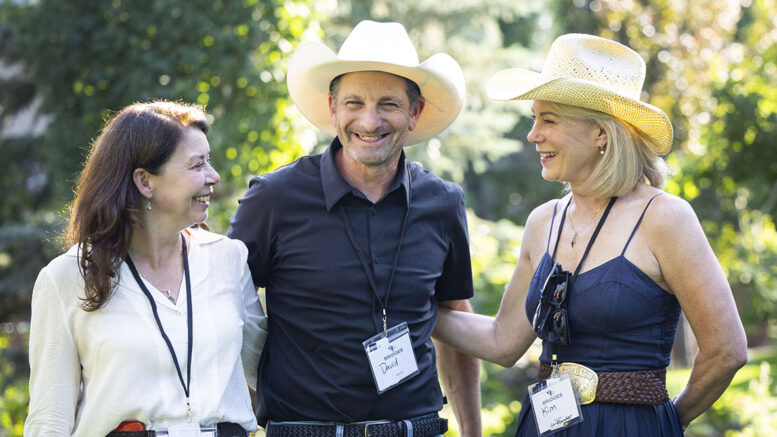
Bridges was founded in late 2024 by two Calgary women, Kim Kitai, who is Jewish, and Michelle Mather, who is Catholic. The organization combats hate by building bridges of understanding, cultural exchange, and shared purpose through interfaith engagement and strong community partnerships.

Bridges Co-founder Kim Kitai.
A significant part of its efforts is to co-ordinate interfaith Shabbat dinners that bring Jews and Christians together to experience the warmth, rituals, and meaning of the traditional Friday night Shabbat meal in a welcoming and respectful setting.
It was at these dinners, where Schindel was able to ask local rabbis attending about the symbolism she had been seeing as part of anti-Israel protests – symbols such as the flag-covered map and the watermelon, thought by some to signal political alignment against Israel’s existence or actions.
“I’m uncomfortable with your necklace because it is erasing one for the other and I don’t believe in that and are you aware that’s the symbol you are presenting,” Schindel told the assistant, who she said she holds no ill feelings for.
“It’s a beautiful necklace but you’re sending a political message while you shampoo my hair.”
While the assistant wasn’t pleased with being confronted, Schindel was able to have an excellent conversation with the salon owner explaining that symbols such as these can be highly offensive to some clients.
Connecting Quiet Supporters Across the Dinner Table
Co-Founder Kitai explains that Bridges was founded primarily to equip allies with the information needed to combat antisemitism and extremism.
“There are a lot of allies out there that support, not just the Jewish population, but recognize that it’s not just the Jews that are at risk right now with the extremism that is going on,” Kitai said. “They don’t get a lot of airplay. But we know they are there.”
One of the central missions of Bridges is to connect with these quiet allies who are eager to learn, understand, and offer support. To aid in this, dinner guests are given practical resources on how to identify antisemitism, who to contact when they encounter it, and how to respond to difficult questions.
The impact of this education is profound.
As Kitai notes, “Once you are shown it you can’t unsee it. So a lot of the people who have come and who we have got to know as friends are seeing things that were always there but they didn’t take notice and now they see it for what it is and now they are not afraid to speak up, not in an aggressive manner but question it, or correct it if it is incorrect.”
Like many Jews, she felt deep pain following the October 7, 2023, Hamas attacks and the subsequent wave of anti-Israel and “anti-Zionist” propaganda on Western streets and campuses. Determined to make a difference, she spent over a year searching for a way to share the truth.
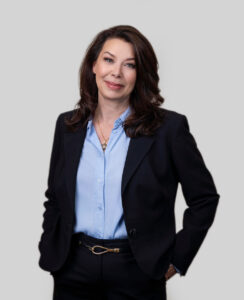
Bridges co-founder Michelle Mather
Her inspiration came during a community gathering, where she spoke with Shuvaloy Majumdar, the Member of Parliament for Calgary Heritage. Majumdar shared his belief that people truly connect and discover common ground when they sit across from one another at a dinner table.
Moments later Mather walked in and the two – who had never met before – quickly bonded over shared concerns about rising extremism, realizing they both wanted to counter hatred with connection and understanding. Kitai proposed the initiative that would bring Christians and Jews to Shabbat dinners.
“Because how can you hate when you see this amazing warm tradition?” said Mather. “I looked at her and I said, ‘Let’s do this.”
Kitai recalls being taken aback in the best way by Mather’s immediate enthusiasm for the idea and she realized immediately it now had to happen. The pair have worked to host several of these interfaith dinners, alternating from Jewish to Christian homes, and the results have been outstanding, Mather said.
“If it’s a Christian host, then they help us curate the list for the Christian attendees and we bring Jewish voices to the table to lead the blessings and Jewish voices to answer the questions and to share what being a Jew here in Calgary is like.
“Face to face engagement is how you build a relationship.”
Empowering Allies to Take Action
At the end of the night, Mather will speak to the Christian attendees about the new veil of modern antisemitism, with a call to act when they see it.
“When you see it, I need you to be courageous,” she tells the Christian attendees. “We cannot wait for leaders to do the right thing, for politicians to do the right thing. We all need to do our part. I need you to be courageous and stand up against it.”
Majumdar is impressed by how quickly the pair has brought Bridges along. They have already helped coordinate six large interfaith dinners. Additionally, they introduced “alumni” events that bring these new friends and allies back together at gatherings throughout the year to reconnect and strengthen bonds. They are also in the beginning stages of an interfaith youth engagement program to inspire young leaders to create a more inclusive and compassionate world.
“Confronting anti-Zionism is a moral test. Not just for politicians, but for the country we are fighting for in the face of a vicious assault on our schools, sanctuaries and streets,” said Majumdar. “What Bridges is doing is not symbolic. It is essential. Because it is an invitation for unity, to build bonds of friendship, marked by the quiet courage of everyday decisions that deny the lie. Kim and Michelle saw a need and did not wait for permission, a program, or a grant.”
From Initial Apprehension to Welcoming Cultural Exchange
Schindel is deeply alarmed by the level of normalized antisemitism she is seeing in everyday life. That’s why, when Mather asked her to attend an Interfaith Shabbat dinner she agreed. At first, she admits she was apprehensive, nervous and almost cancelled at the last minute.
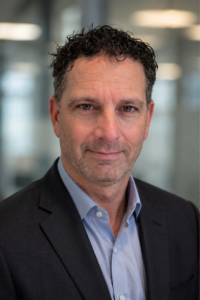
Bridges Director David Hornstein
“There was this fear of whether I would ask something that’s offensive? I’m pretty careful of what I say type of personality so I don’t typically ever want to say something that might be offensive…My Canadian culture goes deep. I’d just rather not be in your presence if I’m going to be upsetting you. So I was really nervous.”
Did she need to bring kosher wine for her host? Would flowers be appropriate? As soon as she walked in she found a safe, inviting, joyful group of people who helped her understand not only Jewish customs and traditions, but what it was like to be a Canadian Jew today. No question was off the Shabbat table.
“After I had gone to my first one, I absolutely loved it, told all my girlfriends and they said ‘wait, what? I want to do this?’”
So Schindel hosted a Christmas interfaith dinner last year. With interest so high she thinks she may soon host another.
Kitai understands the nerves, noting that for every 220 Calgarians, only one is Jewish.
“So a lot of them have not had a meaningful conversation with a Jewish person ever.”
So she works hard at the beginning of the night to take the edge off, often joking with the group that they need to sign a non-disclosure agreement. Once relaxed, the magic happens.
“When you are sitting there, passing the potatoes and having a really meaningful conversation, a nice glass of wine and really getting to know each other, you have a vested interest at the end of the night to support, defend and protect your new friend.”
Bridges aims to deepen engagement with other Christian congregations in response to growing global threats against Christianity. However, she is pleased that these critical discussions are already beginning at the dinner table.
“Every dinner is different,” she said. “We’ve had some dinners where it’s very much about Catholicism and Christianity and we’re getting really deep into religious conversations and looking at the similarities between the faiths.”
Schindel has always recognized the need to stand with the Jewish people and Israel. Now she knows how to do it effectively.
“I believe when the Bible says ‘Pray for Israel’ that we as Christians are called to that and if we’re not doing that, it is a dangerous place for us as Christians to be,” said Schindel. “Jewish culture, the faith and the country of Israel is in desperate need of Christians to stand with them.”
Kitai said interest is so high they could have a dinner every week if they had the time and resources, adding they would like to see this initiative spread throughout Canada.
People attending the Calgary Walk With Israel on September 7 can learn more about Bridges, which will have an information table set up.
Mark Cooper is a Local Journalism Initiative Reporter at Alberta Jewish News.

Be the first to comment on "Calgary interfaith Shabbat dinners building bridges against extremism"