

For those of you whose knowledge of Tu Bishvat is limited to “it’s in January,” here is some background. Tu Bishvat falls this year from sundown on February 1 to sundown on February 2. It is a minor festival at the beginning of the Biblical agricultural cycle. In ancient times, worshippers celebrated the festival by bringing fruit offerings to the Temple. During the Renaissance, Jewish mystics created a new ritual to mark Tu Bishvat with a meal that was modeled on a Passover seder. At this meal, participants ate fruits and grains associated with the land of Israel — including wheat, barley, grapes, figs and pomegranates — and drank ceremonial glasses of wine. Sephardic Jews continued to celebrate Tu Bishvat through the centuries with feasts and visiting friends and family while the Ashkenazis Jews — for whom the holiday fell in the depths of winter — barely marked it.
Today, most North American Jews think of Tu Bishvat — if they think of it at all — as a sort of Jewish Arbor Day. Many people honor the day by planting a tree or donating money for a tree to be planted in Israel, and some Jewish communities now host a contemporary version of a Tu Bishvat seder featuring 12 different fruits and four different wines. In my house, I like to celebrate Tu Bishvat with a vegetarian, or even vegan, meal, particularly one featuring ancient and biblical foods such as barley, dates or figs.
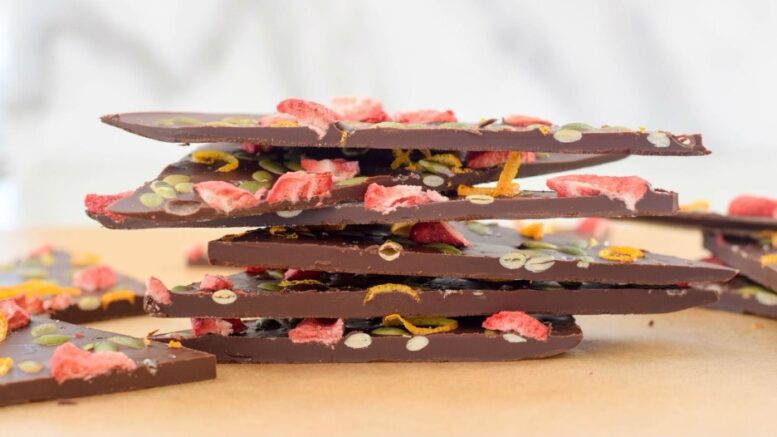
After all that healthy food, however, a small treat is in order. Chocolate bark studded with dried fruits and nuts is an easy and festive dessert that is definitely in keeping with the spirit of Tu Bishvat. Use dark or bittersweet chocolate with 70% or higher cocoa solids which has more antioxidants and less sugar than other varieties to stick to your New Year’s resolution to eat healthier. You may also want to seek out a fair trade brand of chocolate in keeping with the Jewish values of pursuing economic justice and ensuring fair treatment of workers. I recommend Divine Chocolate’s 70% Dark Chocolate Bar, which is excellent for all kinds of baking and easy to find in stores.
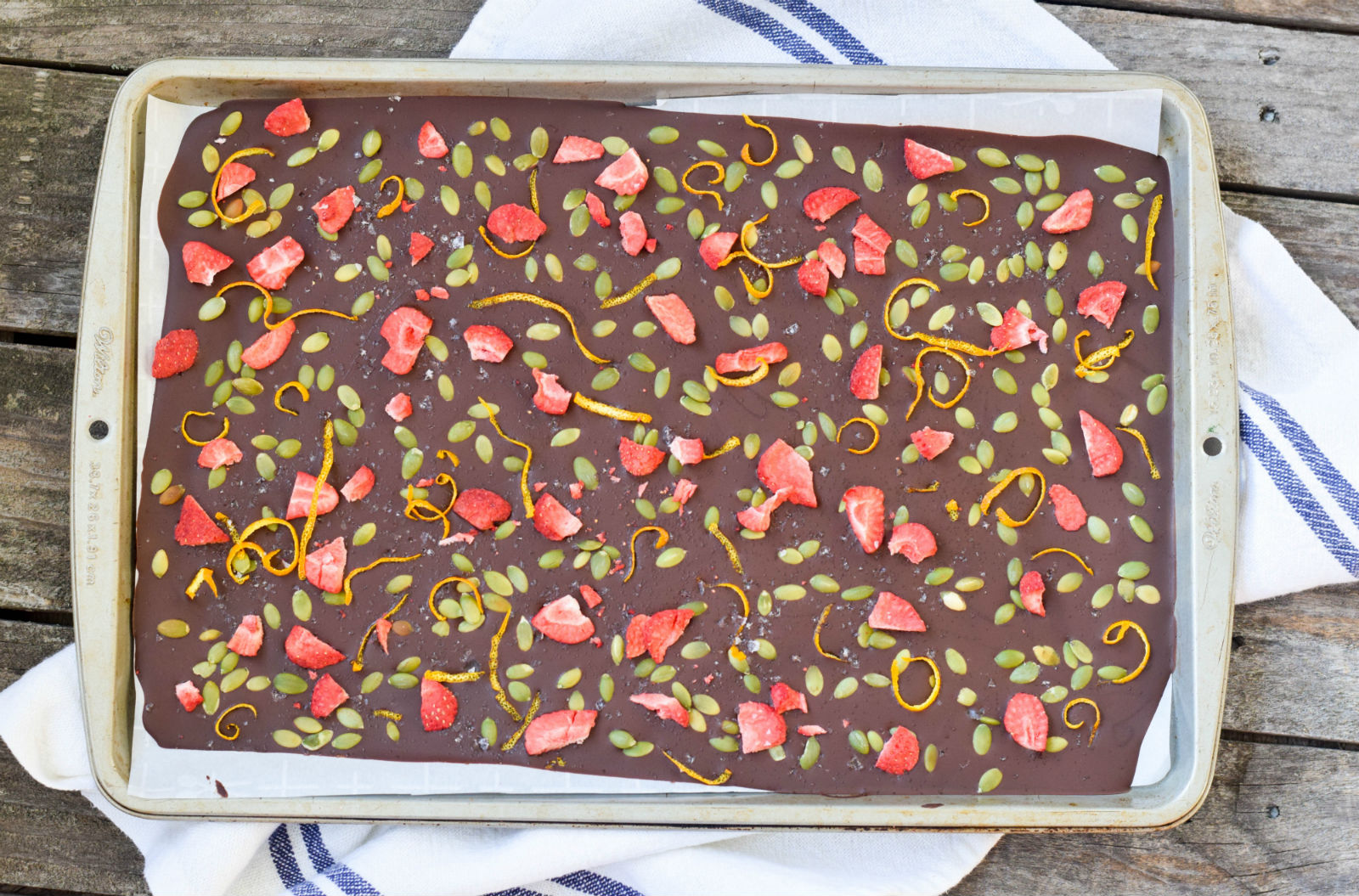
The easiest way to melt chocolate for chocolate bark is by heating it in your microwave for short intervals and then stirring. There is far less chance of the chocolate seizing or scorching using the microwave in this way than with the traditional double-boiler method.
Once the chocolate is melted and cooled slightly, simply spread it on a lined baking sheet and sprinkle on whatever toppings you desire, such as dried fruits, nuts, seeds, citrus peel, coconut and flaky sea salt. Almonds have particular significance as a symbol of good luck and fruitfulness for the Jewish people. But if you have nut allergies in your family, as I do, toasted raw pumpkin seeds or pepitas are an excellent substitute. For the best flavor, lightly toast any nuts or seeds and make sure all of your toppings are dry. Chocolate and moisture do not mix. So, for example, if using citrus peel, zest the citrus in advance and allow the peel to dry on waxed paper before using.
Once you have added the toppings to your bark, allow the chocolate to harden at room temperature for several hours and then break into pieces prior to serving.
Whether you are hosting a full Tu Bishvat seder this year or simply making an extra effort to savor the bounty of the plant world, this easy-to-make fruit-studded chocolate bark is the perfect way to end your festive meal.
Note: Bark will keep for up to 2 weeks in an airtight container.
Click here to view the Nosher recipe.
This article is reprinted from the Nosher.

Be the first to comment on "Recipe For Tu B’Shevat: Chocolate Bark with Pumpkin Seeds, Strawberries and Citrus"