

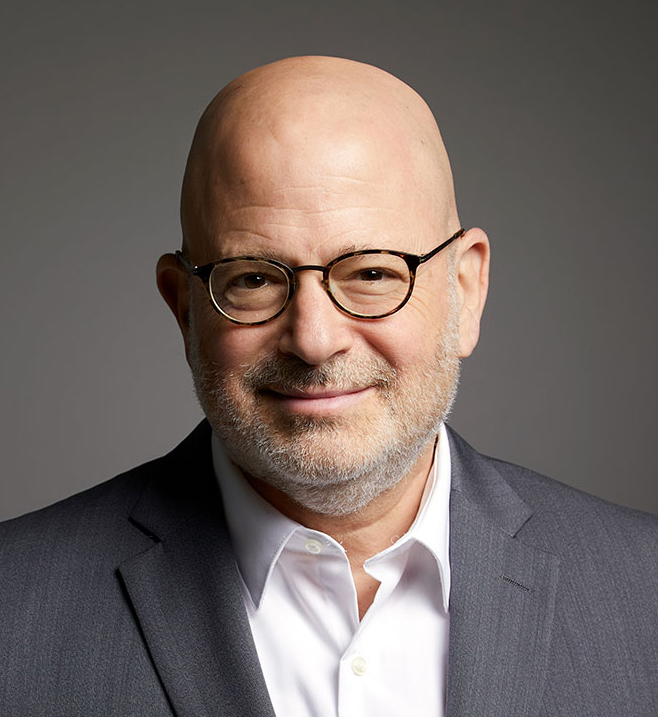
Rabbi Mark Glickman
By Rabbi Mark Glickman
(Calgary) – I remember it like it was yesterday, and I’ve been thinking of it a lot in the runup to Passover. It was the early 1970s; recess-time in the playground outside my suburban-Chicago elementary school. My buddies and I were playing kickball, when one of us kicked a high fly ball, arching over our heads and bouncing its way into an area where Sammy Miller was hanging out with his friends. Immediately, Sammy and his guys grabbed the ball and playing their own game of kickball with it.
“Hey, Sammy,” someone in our group yelled, “give us back our ball!”
“We’re playing with it now,” Sammy replied.
“But it’s our ball – we’ve got a game going!”
“Too bad,” Sammy yelled back. “We’ve got it now.”
“But it’s our ball!”
Sammy stopped his game. “Look,” he said. “We’ve got the ball, and we’re playing with it. It’s a free country, and we can do what we want.”
I don’t quite remember how – or if – that situation resolved itself. What I do remember is being struck by what Sammy said. It’s a free country, so he gets to steal our ball? This is what freedom means – permission to steal someone’s ball on the playground. I wasn’t an expert in American history, of course, but I couldn’t imagine that this is what the Founding Fathers had in mind when they created the nation two centuries earlier.
And had I grown up a decade or more later in Canada, I have a feeling that I would have asked a Canadian version of the same question. Where in the Charter of Rights and Freedoms does it guarantee us the freedom to steal someone else’s ball on the playground?
Indeed, we in the western world tend to define freedom as the ability to do whatever we want. We hear it all the time: It’s a free country, so we can say whatever we want. It’s a free country, so we can build our houses however we’d and paint them whatever color we choose. It’s a free country, so nobody can force us to wear a mask, or take a vaccine, or do anything to our bodies that we don’t want.
What does all of this have to do with Passover? Quite frankly, nothing, and that’s why I’ve been thinking about it so much these days.
Passover, you see, is the celebration of a very different kind of freedom than the one claimed by Sammy Miller and his friends. On Passover, we remind ourselves that our ancesors were ruled by a tyrant, they escaped to the Red Sea, God intervened and drowned their pursuers, and then they were free.
Notably, however, the Israelites weren’t free (as Sammy claimed to be) to do whatever they wanted. To the contrary, their freedom came with obligations – lots of obligations. Remember, close on the heels of the Red Sea came Mt. Sinai. And at Mt. Sinai, the Israelites received the Torah. And the Torah included fully 613 commandments – 613 limitations and restrictions on their behavior.
 The Hebrew word for slaves is the same as the Hebrew word for servant – avadim. The Israelites had been avadim to Pharaoh, but with their Exodus from Egypt they became avadim to God. Their freedom, then, was not the freedom to do whatever they wanted, but the freedom to do what God wanted them to do.
The Western notion of freedom is the ability to what we want. The Jewish notion of freedom is the ability to do what we should. These are two very different understandings of the same idea. In the west, freedom is the lack of control by any ruler. In Judaism, freedom is the privilege to be controlled by One Ruler. In the West, to be free is the ability to do what we want; in Judaism, freedom is the ability to do what we should.
I don’t recall whether Sammy Miller was Jewish. But as I recall his playground banter that day, his understanding of freedom wasn’t at all aligned with Judaism’s understanding of it.
So when we gather around our Seder tables this Passover, perhaps we should consider the many blessings of freedom we enjoy these days, as well as the enormous responsibility that comes with those blessings. You don’t have to, of course, but you certainly can, and it might be a good idea. After all, it’s a free country, and to us Jews, this is what it means to truly be free.
Rabbi Mark Glickman is Rabbi at Temple B’nai Tikvah in Calgary.

Be the first to comment on "Rabbi Mark Glickman: It’s a Free Country – Passover & the Jewish Understanding of Freedom"