

By Mark Cooper, Local Journalism Initiative Reporter
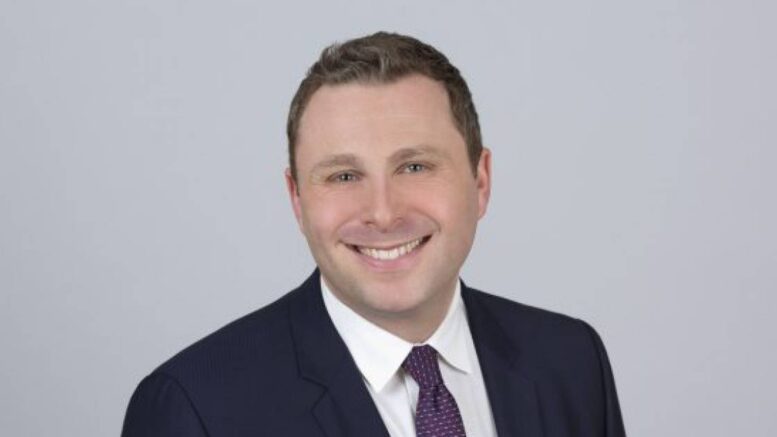
For more than 20 years, Mike Fegelman had strictly guarded the sanctity of Shabbat, keeping the Sabbath free from the demands of his working life as the executive director of Honest Reporting Canada.
But the moment the observant Jew stepped into his Toronto orthodox synagogue on October 7, 2023, he was met with the most daunting crisis of his career that demanded his immediate action.
The weight of his duty to Israel and the Canadian Jewish community instantly took precedence, forcing him to make the rare decision to override Jewish law and get to work.
“I got in there and one of my good buddies who is the president of our shul was crying in the corner, and I asked him: what’s going on?” said Fegelman, who then learned the horrific details of the Hamas terrorist attacks on Southern Israel.
“I remember going up to the rabbi and saying: I think I’ve got to go, and he said: Go!”
For three consecutive days, away from family, devastated by the tragedy and fueled mostly by caffeine, Fegelman relied on his strong connections he had built with Canadian journalists over some 20 years.
For those 72 hours, his work almost entirely focused on facilitating dozens of interviews with Israelis on the ground, ensuring Canadians could bear witness to the atrocities committed that day. He knew immediately his job would never go back to what it was prior to October 7.
A Mission Born from Media Frustration
Honest Reporting Canada was started in 2003 by some concerned Canadians who were frustrated by Canadian media coverage of Israel, putting the country under what they felt was an unfair microscope, disguising opinion as news and leaving out important context.
“There was a sense that instead of just being fatalist and putting up their hands and saying ‘there’s nothing we can do’ … there were some key businesspeople and prominent stakeholders in Toronto and throughout Canada that said ‘what if we created an organized response mechanism, a professional organization that will engage with Canada’s journalists with professionalism, with moderation,” said Fegelman.
He was hired by Honest Reporting Canada in 2004 from his job as a project manager at a marketing company to help do that work.
Subscriptions have since grown from a couple hundred to more than 80,000 Canadians from coast to coast, comprised of people from many faiths, cultures and backgrounds.
But with the rapid increase of followers since October 7, so has the workload of Honest Reporting Canada’s small but nimble six-person staff.
“Prior to October 7 there was somewhat of a predictable pace, but I would say our work since then has escalated two to three times more.”
Beyond the scale and rapid pace of the challenges his organization faces, the “egregious nature” of the narrative directed at Israel makes them complex to manage, he says.
“In a certain sense, the hate that is traditionally on the margins of our society has really made an asserted effort to move to the mainstream.”
Change Requires Constant Pushback
He believes it is the organization’s responsibility to constantly push back with pride against false narratives to ensure Israel and the Jewish people are held in the high esteem that both deserve.
“I should also say we’re an organization that firmly believes that Israel is deserving of legitimate criticism,” he said, noting in Israel there is a vibrant and sometimes combative journalistic landscape. “Healthy criticism is warranted, constructive and helpful.”
However, since October 7, Honest Reporting Canada has observed a rapid rise in the delegitimization, demonization, and double standards applied to Israel, rhetoric the group says often crosses into antisemitism. Furthermore, the organization notes that those who voice these perspectives on media platforms frequently go unchallenged by Canadian journalists.
Historically, Fegelman has been able to address these concerns collegially with reporters and editors to ensure instances of unfairness are not repeated in future stories.
“I would rather educate a journalist and try to prevent bad media coverage from happening than try to cure it after the fact.”
However, as his March 10, 2026 written testimony to the House of Commons Standing Committee on Canadian Heritage articulates, Fegelman has faced an onslaught of post October 7 anti-Israel stories that he says promote “hardline anti-Israel disinformation” and contribute to a spike in anti-Jewish hate crimes in Canada.
“It soon became clear that for CBC – and for wide swathes of the Canadian media landscape – their role was not to report the facts to the Canadian public, but to use their immense influence in society to promote a narrow, ideological agenda,” he testified.
“Present day news outlets regurgitate talking points from pro-Palestinian activists and overwhelmingly feature guests with a predictable anti-Israel viewpoint; presenting them as credible, while choosing not to include opposing voices.”
Challenging the Public Broadcaster
While Fegelman has challenged all corners of Canada’s media landscape his most vociferous criticism is saved for the CBC which he says deliberately chooses to promote ideology over facts at the taxpayer’s expense.
Honest Reporting Canada subscribers now receive near-daily action alerts. These emails ask them to sign pre-written complaints to journalists and editors over coverage the group flags as biased or incomplete. Often, the action alerts are directed at the CBC.
“There’s no question that CBC is the number one proponent of media bias against Israel in Canada, whether that’s English or French Canada with Radio Canada,” he said, noting that part of that is due the number of resources the public broadcaster has at its disposal.
But Fegelman is deeply critical of CBC’s editorial direction, noting the highly controversial directive to its journalists not to refer to Hamas as terrorists, as well as allegations the public broadcaster sanctioned one of its Jewish journalists for posting video on his own social media platform of a pro-Palestinian protest outside of a Toronto Yom Kippur gathering.
CBC Defends its Reporting
In a written response to questions from Alberta Jewish News about these criticisms, Chuck Thompson, CBC’s Head of Public Affairs, defended the public broadcaster’s objectivity.
“We firmly reject the assertion that CBC News exhibits an anti-Israel bias, or that our coverage prioritizes ideological narratives over facts,” said Thompson.
Thompson said that CBC journalism adheres to strict standards of fairness, balance, and integrity. He defended the network’s restriction on the word “terrorist,” arguing that credible international outlets have similar policies “to rely on precise, fact-based descriptions of events rather than adopting labels without attribution.”
Fegelman, however, noted that public backlash forced the network to reverse that policy in late summer, when an internal memo had allegedly instructed journalists not to call the 9/11 attacks “terrorist attacks.”
Despite that reversal, the network has not changed its stance on the October 7 attacks, and journalists are still advised against using the term without attribution.
Thompson added CBC is “deeply troubled” by the assertion that its reporting contributes to a spike in anti-Jewish hate crimes.
“Antisemitism is a vile reality that has seen an alarming and well-documented rise in Canada,” he said. “CBC News has reported extensively on this issue, highlighting the fears and threats faced by the Jewish community.”
Collaborative Effort Needed
But Howard Fremeth, Vice President of Communications at CIJA (The Centre for Israel and Jewish Affairs) said the media is not operating in a neutral environment.
He noted warnings from Canada’s security agencies that the frequency and severity of antisemitism have created an environment in which extremists are directed toward more violent pathways.
“That is why the media have a critical responsibility to stick to rigorous standards of accuracy, integrity and fairness,” wrote Fremeth in an email.
“However, far too often, from our publicly funded broadcaster to other networks, we have seen Canadian media fail to uphold their own rules and policies.
“We have partnered with Honest Reporting Canada on previous campaigns, and organizations such as HRC, along with other influentials voices, play an important role in scrutinizing media coverage and holding news organizations accountable to their uphold their own standards.”
Encouraging Progress Being Made
Fegelman says he understands that sometimes people may observe the work his and other organizations do to fight for media balance as pugilistic, but he says that’s not always the case.
“More often than not you can file a complaint and then you’ll get a listening ear or a prompt response,” Fegelman said.
“A lot of time you’re going to have to agree to disagree and that’s OK. But there is a dialogue.”
He notes some significant progress being made with some media organizations such as the Globe and Mail in the national newspaper’s editorial viewpoint on recognizing antisemitism.
“We’ve noticed in the past half year or so that the editorial view of the paper has been actually incredibly supportive of the Jewish community, going as far to say on record that anti-Zionism is antisemitism and calling on the government to consider it so.”
Fegelman would like to see this kind of momentum happen with alacrity, but he recognizes the journey will be a long one.
While he acknowledges that the CBC occasionally corrects its journalistic transgressions, he argues that the network, and other media outlets, too often resort to evasion or window dressing to obscure their mistakes.
A Call for Independent Media Audits
Among other recommendations to Parliament Fegelman would like to see a permanent, independent commission be created to audit and investigate systemic bias in publicly funded media.
CBC’s Thompson strongly disagrees with these recommendations. He stated that Honest Reporting Canada’s recommendation requiring publicly funded media to submit regular reports to Parliament about editorial decisions is “fundamentally incompatible with the principles of a free press.”
“We already have robust, transparent mechanisms in place, such as the independent Office of the CBC (Ombudsman) who investigates public complaints and publishes its findings for all Canadians to see,” he wrote.
Fegelman argues that the office lacks true independence. Because the network’s board appoints the ombudsman – frequently choosing an insider from the CBC ranks – he believes the office is incapable of policing itself. He also says the office can only conduct a review but can’t command and enforce corrective action.
The Ongoing Battle for Balanced Coverage
As he’s done for 22 years, Fegelman will continue to fight for the balanced coverage he believes Israel and the Jewish community deserves.
Buoyed by the engagement he has seen from their base of followers from all walks of life and from communities across Canada Fegelman will continue to try to make a difference.
While he understands that Canadian Jews may feel alone, he insists that is not the case. Instead, he sees a steady increase in Canadians speaking up against antisemitism and biased or incomplete media coverage.
“Naturally there’s a fear. There’s a fear of consequences for speaking up. But we need to push back very strongly against that.”

Be the first to comment on "Honest Reporting Canada pushes for fair media coverage on Israel"