
by Deborah Shatz and Jennifer Kovacs, LJI Reporter
(Winnipeg) – Ahead of the June 27 opening of the Canadian Museum for Human Rights’ controversial Nakba exhibit, concerns by Jewish advocacy groups are growing over the museum’s one sided narrative and its “lack of historical context.”
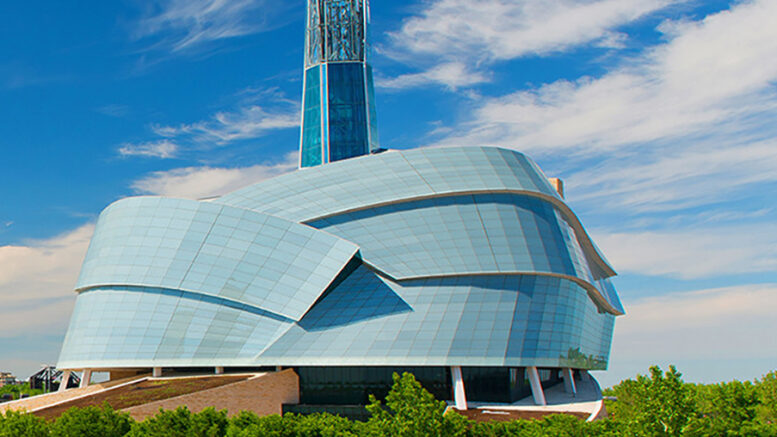
The exhibit, titled “Palestine Uprooted: Nakba Past and Present,” is slated to open to the general public on Saturday at Winnipeg’s Canadian Museum for Human Rights.
The Centre for Israel and Jewish Affairs (CIJA) is calling for the Museum to delay the opening or revise the exhibit. CIJA is also calling for the Minister of Canadian Heritage to hold the museum’s leadership accountable for failing its own standards of curation and for a lack of consultation. “We call on the Minister of Canadian Heritage to hold the museum’s leadership accountable and ensure that national institutions are not weaponized against Canadians to serve a one-sided political agenda,” stated CIJA.
Meanwhile on June 22, the only Jewish Board Member of the CMHR, Mark Berlin, resigned from his position as a trustee on the board.
In his resignation letter (published by Canadian Jewish News) Berlin, a lawyer and a faculty member at McGill University specializing in human rights law, expressed concern that the exhibit presents a one-sided narrative and does not adequately address the experiences of Jewish communities affected by the events surrounding Israel’s independence.
He stated, “Presenting the Palestinian displacement of 1948 without its proper historical and political context offers a narrow one-sided argument of history that can only deepen the distrust and animosity that currently exists between Jews and Muslims in this country.
“The undeniable historical facts are that the 1947 United Nations partition plan proposed the creation of separate Jewish and Arab states in Mandatory Palestine: the Jewish leadership accepted the plan while the surrounding Arab states and local leadership rejected it. Five Arab states immediately launched a war against the newly established state of Israel. As a result, hundreds of thousands of Palestinians were displaced as were hundreds of thousands of Jews from Arab lands.
“The broader context must be part of the story. Ignoring these central historical realities undermines the Museum’s mandate to promote respect for others and to enhance the public’s understanding of this complex history.”
Berlin concluded his letter stating, “Because the museum chooses to proceed with this exhibit in its present form despite repeated concerns raised by myself and members of the mainstream Jewish community and others seeking a more balanced and historically complete presentation, I can no longer, in good conscience continue to serve as a Trustee.”
In an interview with Canadian Jewish News following his resignation, Berlin emphasized his belief that the story of the Palestinian displacement should be explored, but only in a more comprehensive fashion. He recounted his conversation with the board, “I said that the story of the Palestinian Nakba was real. Trauma, intergenerational trauma, happened as a result. There was suffering on the part of the Palestinians. The story had to be told, and I wanted the story to be told. I think the museum is a place to tell the story. But I wanted them to tell the whole story. And the whole story includes the rationale for why the Nakba happened,” he said.
In response, the CMHR released a statement clarifying that “the exhibit focuses on the lived experiences of Palestinian Canadians and the human rights impacts of forced displacement that they have faced over generations.”
They stated that “focussing this one exhibit on the human rights violations faced by Palestinian Canadians does not negate the human rights violations faced by Jewish people or the devastating effects of antisemitism.”
“Our mandate includes combatting antisemitism, its devastating impact and alarming growth,” continued the CMHR. “We have done this work since the Museum opened in 2014. Our work in Holocaust and antisemitism education and programming has recently expanded and we will continue these efforts.
“We have communicated repeatedly with Jewish organizations across Canada to clarify the scope and the focus of the exhibit. Following those meetings we added external review of our research sources and background documents. And we committed to develop additional Museum content on the forced displacement of Jewish people from the Middle East and North Africa in the future.”

Be the first to comment on "As Nakba exhibit opens at CMHR concerns grow over one-sided narrative"