

By Mark Cooper, Local Journalism Initiative Reporter
CALGARY- Like many of her peers across the Arab world, Fatema Alharbi’s early education was steeped in anti-Israel sentiment and Holocaust revisionism.
If they talked about it at all, teachers often framed the genocide of six million Jews as an exaggerated Israeli propaganda campaign or a tragedy the victims had invited upon themselves.
Today, the 34-year-old Bahraini author is leading a different conversation.
As a peace activist, she has made it her life’s work to challenge those deep-seated prejudices and build a bridge between her culture and the Jewish community.
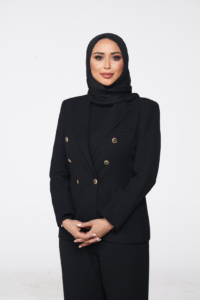
Fatema Alharbi
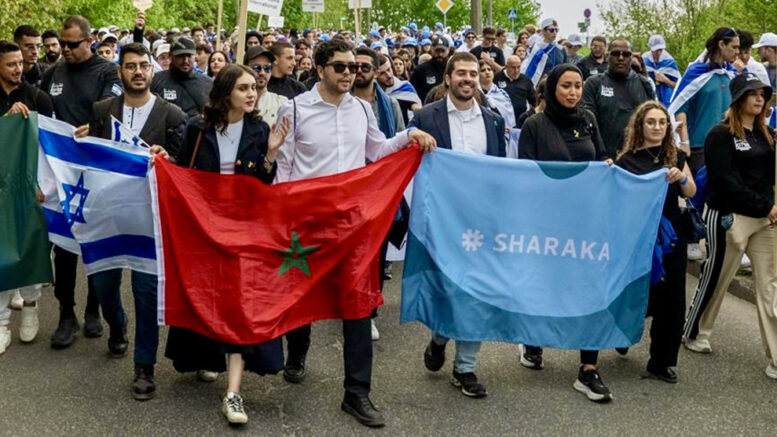
“Being in an Arab and Muslim country you hear only one narrative and it is all bad about Israel,” said Alharbi, the Gulf Affairs Director of Sharaka, a non-governmental organization founded after the signing of the Abraham Accords by young leaders from Israel and some Gulf states to promote “warm peace” and normalization through people-to-people diplomacy.
“Because I’m a writer, I know that every story has two sides, so I always wanted to hear the other side that we don’t get to hear.”
In May, Alharbi and a Sharaka delegation – comprising representatives from both the Arab world and Israel – will embark on their inaugural visit to Canada. The group was invited by the Calgary Jewish Federation’s Holocaust and Human Rights Remembrance and Education department and will spend a week in the city.
According to CEO Rob Nagus, the Federation is seeking creative approaches to the future of Holocaust education and views Sharaka as an inspiration for such innovation.
“In 2026 there’s a growing amount of Holocaust distortion and denial and we have to find new and engaging ways to educate about the Holocaust and talk about it, specifically reaching out beyond the Jewish community,” said Nagus.
“Sharaka provides a really innovative approach to both Holocaust education and building allyship between Jewish and non-Jewish communities.”
The Abraham Accords represent a landmark series of U.S.-brokered agreements that established full diplomatic normalization between Israel and several Arab and Muslim-majority nations. Named after the biblical patriarch Abraham – a figure revered by Jews and Muslims as a common ancestor – the name symbolizes a shared heritage and a renewed push for regional collaboration.
Young leaders focused on lasting peace
However, for the young leaders of Sharaka (Arabic for “partnership”), these accords needed to be more than just signatures on a page.
Rachel Brynien, Sharaka’s U.S. Affairs Manager, explains that the group felt a deep responsibility to ensure this wasn’t another “cold peace.”
Brynien noted that while the signing of the accords was a significant milestone, past treaties with Egypt and Jordan proved that formal agreements alone do not guarantee lasting peace. Because those previous arrangements functioned primarily as security pacts between governments, they lacked meaningful interaction between citizens. Sharaka’s goal is to move beyond these historical “cold” peace agreements by fostering the genuine human connections necessary for a warm, enduring partnership.
“These young leaders really wanted to make sure this people-to-people aspect of peace wasn’t lost,” said Brynien, noting how much the organization’s work has helped expose the commonalities between Jews and Muslims.
“Everyone in the region – Jews or Muslims – are at their core very similar. We eat very similar foods. The languages are similar, family values. All these things. We really are the same people.”
“Everything is just so similar, yet we’re taught these people are the other side, or so different.”
Mandate to hate drove passion to visit Israel, Auschwitz
For Alharbi, the mandate to hate was the very thing that drove her toward peace activism. When her teachers insisted on animosity toward Jews, she sought refuge in her mother’s wisdom, who taught her that such blind hatred had no place in their home.
This childhood realization transformed into a lifelong mission. Once she was old enough to research and read independently, she began deconstructing the propaganda she had been fed, ultimately fueling a desire to visit Israel and witness the “real” Middle East firsthand.
One of the first contacted to join Sharaka, she would be the first non-governmental youth from Bahrain to ever visit Israel.
“I’m used to travelling but going to Israel, everyone kept telling me ‘be careful, don’t trust the Jews’ but I wanted to go, no matter what. It was a once-in-a-lifetime experience.”
Walking the streets wearing her hijab, she was shocked by the warmly curious reception she received when Israeli strangers came up to her to ask about her background.
“I love this about Israelis. They don’t have the shyness of approaching people.
“The first stranger I met, when I answered him he said ‘Welcome, we’ve been waiting to have peace with Arabs for a long time.’
“That story happened with everyone I met. Everybody was so happy seeing us there. I couldn’t imagine … They’re Jews. They’re supposed to hate us,” she remembers thinking.
“That experience shocked me and changed my whole perspective. I found purpose because of that trip.
“Because they filled me with so much love, the Israelis and the Jews, I wanted to be the person that takes that message to my own people, to the Muslims and Arabs, because I’m one of their own. I wanted to be the bridge between Jews and Muslims.”
Elation turns to heartbreak
Her elation was short-lived, turning into heartbreak. While Bahrain’s laws shielded her from physical harm, the digital world offered no such sanctuary. Following her media appearances in Israel, she became the eye of a digital storm – a vicious hate campaign against her.
“They called me a traitor,” she recalls. “They said, ‘If I find you, I’ll kill you.’ They told me I had betrayed all Muslims.” It was everything you can imagine, and worse, she said.
The initial weight of the threats nearly broke her, but the depression eventually gave way to a hardened resolve. Instead of silencing her, the venom became her catalyst. “They fuel me,” she says.
She walked away from her government career to give her life over to activism. In 2022, she stood at the gates of Auschwitz-Birkenau with a 50-person Sharaka delegation of Muslims and Jews, staring at a history her teachers had once dismissed as a myth. She has returned twice since, bringing new people to see the horrors of the past. “Every time is harder than the last,” she says.
“We want people to fight extremism and hate through learning about the Holocaust.”
An October 7 resolution
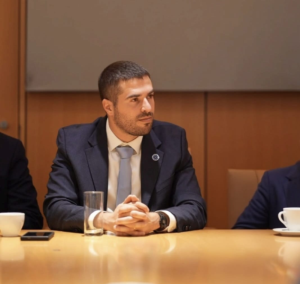
Noam Meirov
Noam Meirov, a 30-year-old Israeli member of Sharaka, lost many family members in the Holocaust. He also lost close friends in the Hamas attacks of October 7, 2023.
Rather than lashing out in anger, he joined Sharaka to help build new friendships across the region.
“Being involved in Sharaka is my October 7 resolution because I came to the conclusion that it’s not just about winning the war, but the question is: What vision will we have post war?” said Meirov, now Sharaka’s managing director.
“On October 7 itself, I felt on that day that the war Hamas is raging against Israel is a war to cancel the Abraham Accords. So I felt the only real revenge would be the expansion of the Abraham Accords.”
He explained that Sharaka thrives on a simple foundation: respecting each other’s often similar traditions while gaining a clearer view of the region’s deep-rooted frictions. They aren’t trying to solve every conflict overnight – some issues are purposefully set aside – but the focus remains on keeping the conversation respectful. As he put it, “What has changed now, is we can sit at the same table and have a conversation.”
Similar to Alharbi, Meirov’s visit to the UAE was an eye-opener. He discovered that the Gulf states and Israel share a deep commitment to hospitality and a mutual drive for technological sophistication.
Extremism in the West concerning
With the positive progress happening as a result of the Abraham Accords, Meirov, Alharbi and Brynien are all disturbed by the division they are seeing in Europe and the hatred and polarization taking place on North American streets and campuses.
It is one of the reasons the organization has been so focused on missions to the United States and now Canada, said Brynien.
She noted the importance of having voices from Gulf states highlight a striking reality: the level of extremism and cultural intolerance currently seen in the West often exceeds what is experienced in their own countries.
“Unfortunately, the rhetoric that we see about the Middle East is way more intense in college campuses than even in Bahrain or Morocco or the UAE,” she said.
Nagus, of the Calgary Jewish Federation, agrees that interfaith dialogue is at its lowest point in the West in his 20 years of working in the Jewish space in Canada.
“It’s been a really challenging time for the Jewish community’s interfaith work and I think there are best practices that Sharaka can bring to learn from their work with all these different people throughout the Middle East,” Nagus said.
“The Sharaka model provides hope for the North American Jewish community at a time when interfaith relations are really frayed and difficult.”
While the itinerary for the Sharaka delegation – which also includes a Moroccan representative – is still being finalized, it will feature a major interfaith event at a local church on May 17 in coordination with the Federation. The visit will also include youth and school programs, along with opportunities to engage with policymakers and political allies.
The Federation will share further details with the community as the schedule is confirmed.

Be the first to comment on "Muslim-Jewish group brings peace mission to YYC"